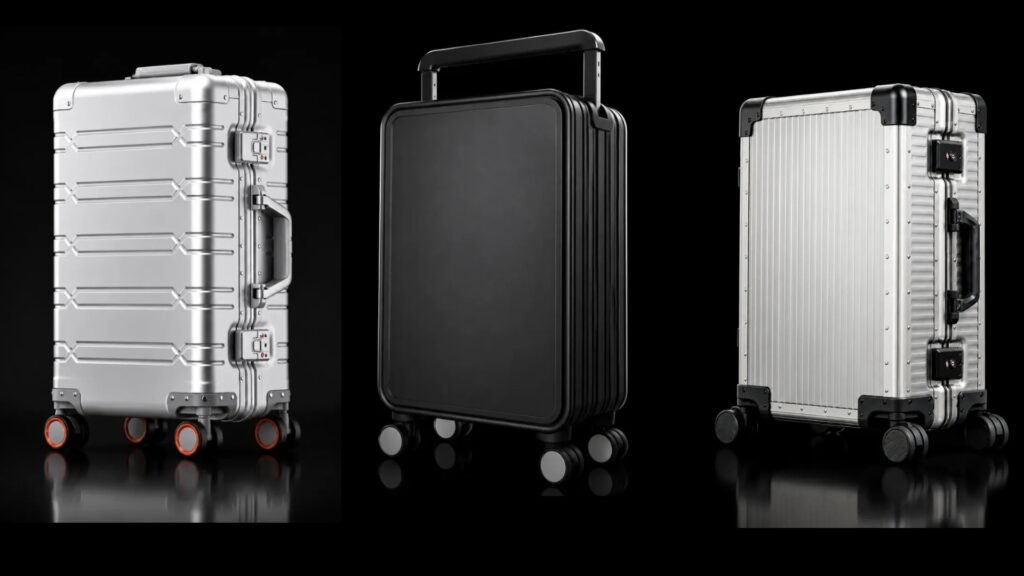
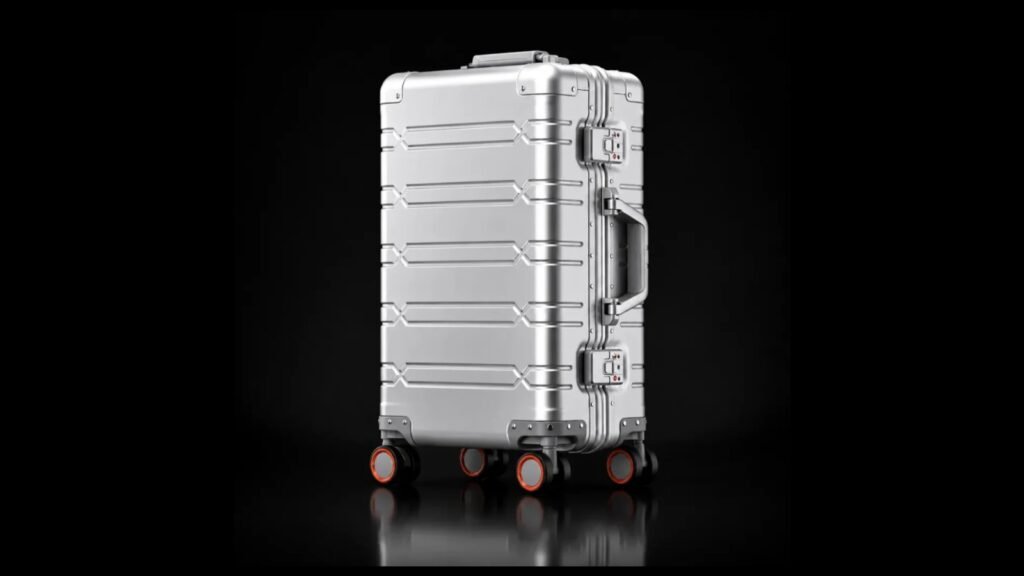
How to Customize Luggage for Different Uses
Start with what the user carries and does. A useful design gives those items a suitable place, lets the user reach them in the intended setting, and combines the opening, interior, handles and locks into one workable case. The right choices can differ even when two brands want a similar exterior.
Everyday use: what needs to be easy to carry, reach and put away?
A suitcase used every week may spend more time beside a desk, in a vehicle or between meetings than in an airport. Before choosing its size or finish, list what goes inside and follow the journey from the front door to the place where it will be stored. A wheeled case makes sense only if its packing space and way of moving suit that journey.
For a commuter, the list might include a laptop in its sleeve, a document folder, charger, coat and personal items. A same-day sales visit might replace the coat with samples and printed information. Someone combining work with an overnight stay needs a place for clothing as well. These are different packing tasks, even when the customer wants the same outside appearance.
Separate the items used along the way from those that can stay packed until arrival. If the laptop comes out at each appointment but clothing stays inside, access to the laptop deserves more attention than an extra pocket that is difficult to reach. If the user carries only a few small items and repeatedly climbs stairs, compare the loaded case with the way they already carry those items rather than assuming wheels will always make the trip easier.
Match quick access to the actual items
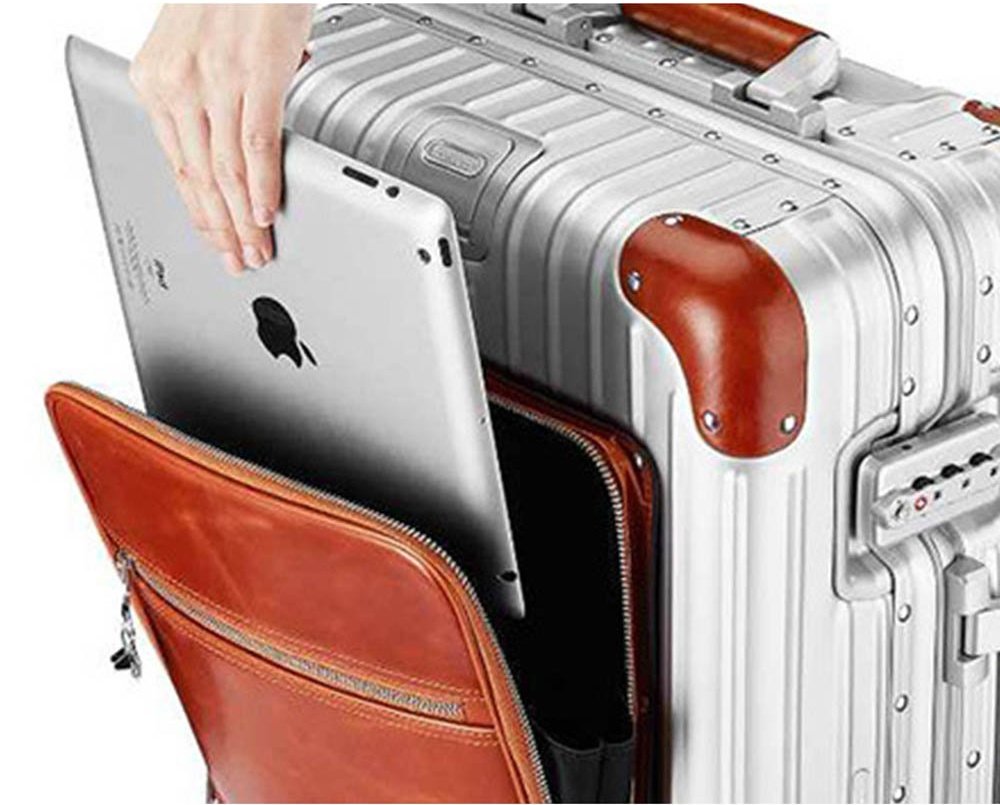
Our TS-003 has a separate zippered leather front pocket. It is a starting point for a brief that calls for access to documents or a device without opening the clothing compartment. The device, sleeve and folder still need to pass through the opening and fit inside; a screen-size label alone cannot establish that.
Include putting the case away in the design discussion. Where will it stand at the office? Can the intended compartment open there? Will it fit in the actual vehicle storage space with the trolley retracted? Measure the complete outside shape, including wheels and projecting hardware, rather than using the shell dimensions alone.
A lunch container, wet umbrella or separate pair of shoes adds another requirement. Identify the container and the separation the customer expects. A normal lining pocket is not, by itself, a verified leakproof compartment. Discuss the arrangement before building that promise into the product description.
Small spaces and frequent opening: which access works best?
A narrow space does not automatically point to a top-opening case. First ask what is taken out, how the case will stand and which directions have room for a lid or a device to move. A case beside an office chair, one on a hotel luggage rack and one in a shared train storage area do not offer the same access conditions.
| What happens during use | First layout to compare | What could change the choice |
|---|---|---|
| Documents or a laptop come out repeatedly; clothing can stay packed. | A separate quick-access pocket or compartment. | The item must pass through the opening; the pocket needs its own closure decision. |
| Items come out of the main compartment, but there is no room to spread two halves. | A top-opening main compartment, or another verified single-sided main opening. | Lid clearance, case position, support and access to lower items. |
| Most contents are unpacked together after arrival. | A clamshell layout remains a candidate. | There must be room to support both sides in the intended position. |
A front pocket is not a front-opening main compartment
On TS-003, the front pocket is separate from the two-section main case. It can address a device-access requirement, but it does not provide access to clothing in the main compartment. If the brief is to reach the main packing area from the front, that is a different structural request. We need to review a corresponding case or design, rather than rename a front pocket.
The space in front of the pocket also matters. An opening may be reachable while the case stands, yet the user may still lack room to draw a long folder or laptop straight out. Use the actual item and its intended removal direction in the sample review.
Top opening changes the opening space, not every packing problem
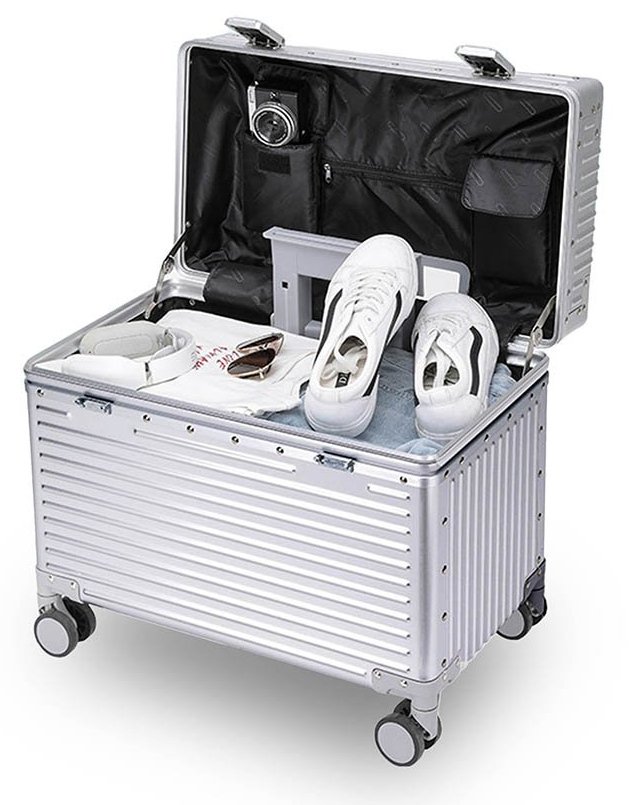
Our TS-009 provides an example of a top-opening main compartment. Its main body stays in one place while the lid lifts, instead of opening into two packing halves. There is still a lid swing to allow for. Check the space above and behind it, the surface supporting the case and the position used for taking items out.
A charger at the bottom of a deep compartment may remain inconvenient if clothing or packing cubes sit above it. Moving frequently used items to an accessible position can be as important as choosing the opening. A divider, pocket or removable inner arrangement is a design candidate to assess against the selected case, not a feature to promise without checking.
For a clamshell case, assess where both halves will rest and how the dividers retain contents during opening. It can still suit a customer who wants to unpack and organize both sides at once. Our top-opening and clamshell comparison explains the layouts; the decision here is which one fits the customer’s actual place and routine.
For the sample, recreate that place as closely as practical. Load the intended items, operate the closures, open the compartment, remove and replace the item, then close it again. Observe whether the case needs to be moved or held, whether other items must come out first and whether anything falls or shifts. A closed-case photograph cannot answer those questions.
Business travel: keep devices, files and clothing usable together
For a business collection, “fits a laptop” is not a complete brief. The laptop may be in a sleeve; a rigid folder may be wider than the device; the charger may need a separate place. Record all of them, then decide which should be accessible between meetings and which can stay in the main packing area.
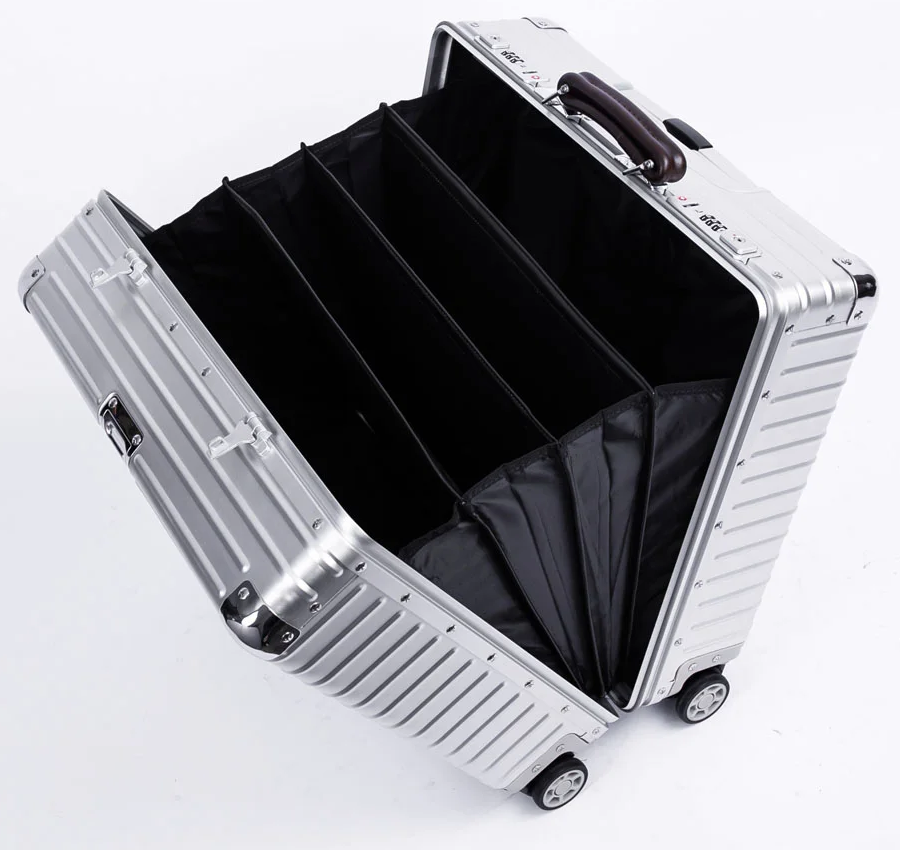
Compare a device pocket with document sections
A separate device pocket, such as TS-003’s, and the document sections in our YCT-056 answer different packing requests. The first provides a separate opening; the second organizes documents inside the case. A divider does not automatically provide outside access, so review how the case opens as well as how the files are sorted.
Our YCT-006 business trolley has a telescopic T-handle and its own main-compartment layout. That makes it another model to discuss, not evidence of a dedicated laptop compartment. Choose the interior around the contents instead of treating a business-style exterior as proof of device fit.
If the customer also carries a backpack on the trolley, bring that backpack or its actual pass-through dimensions into the discussion. The opening must suit the trolley and grip arrangement. Compare grip reach, button operation and retraction in the loaded configuration; our luggage handle guide covers those component choices in more detail.
Empty weight belongs in this conversation. Do not describe a metal business case as lightweight simply because it is compact. Compare the selected case with its final interior and hardware, then add the actual contents. If the user must lift it frequently, that complete load is more useful than an isolated capacity figure.
Sales samples: design for the presentation, not just the journey
A salesperson may need the case to carry products between appointments and become the place from which those products are presented. Start with the complete sample set: products, protective packaging, accessories, printed information and anything used to demonstrate them. Their dimensions, weight and intended orientation determine more than the outside size of the case.
Decide whether items come out individually or as a group
Consider an illustrative project with several product samples and their accessories. If the salesperson takes one item out at a time, each position needs an accessible edge or another suitable way to lift the item. Closely packing everything into the available space may look orderly but leave no practical way to grasp a sample.
If the customer wants to put the whole group on a table, a removable tray could be evaluated instead. It needs to pass through the opening and be manageable with the full intended load. A fixed insert might suit a presentation inside the case. These are candidate arrangements to review, not a claim that a particular tray already fits every model.
Then follow the return journey. Where does the charger go after a demonstration? Can the sample return to the correct position without taking out another item? Does a lid pocket still close with its intended contents? Include the original packaging if it will travel with the product; bare-item measurements may miss the actual space requirement.
For a top-opening brief, TS-009’s main compartment can be a starting point for discussion. Whether it can accommodate the proposed contents and insert needs a separate fit review. Its open interior photograph demonstrates its layout, not a completed equipment-protection or sample-display project.
Review the sequence on the intended table or floor: set down, open, remove, present, return, close and lift. If the items also require defined protection during transport, specify that separately. An insert that organizes the display has not, by that fact alone, demonstrated impact protection. Our lining and interior guide explains interior choices; this scene establishes what those choices must let the salesperson do.
Corporate gifts and team issues: one appearance, different packing needs
First establish what the recipient receives: an empty suitcase for future travel, or a suitcase containing a prepared gift set. For the first, the brand presentation and the recipient’s later use guide the choices. For the second, opening order, included items and the way they are held also become part of the brief.
A gift insert should be considered together with what happens after the gifts are removed. If the recipient will use the case for travel, a proposed arrangement should not unnecessarily make that later use awkward. Discuss whether gift packing can be removed and which travel dividers or pockets should remain. Confirm the actual construction rather than promising a removable system from a rendering.
Treat exterior color, finish, handles, lining, logo and packaging as one visual proposal. Review the logo on the chosen shell and at its actual location, rather than approving only a large artwork on a screen. Exact artwork and process details belong in the branding approval work; order quantities and size/color splits belong in our custom luggage MOQ guide.
Team purchases may need more than one internal version
A shared exterior can still contain different arrangements for different roles. One group may carry documents, another a defined sample kit. Build a configuration list that names the base model, interior, identification and accessories for each version. This makes the difference visible before sample approval rather than leaving it inside a broad request for matching luggage.
If names, numbers or other individual details are requested, establish their production scope and approval method separately. Do not assume an ordinary branded order includes per-person personalization or delivery to each recipient. For later orders, retain an identifiable approved configuration and record proposed changes instead of relying on a similar-looking photograph.
Different markets: adapt to local use, not national stereotypes
A destination country is the beginning of a brief, not the design conclusion. Ask which cities, travel routes, seasons, sales channels and users the product is intended for. Two customers in the same country may have very different storage space, transport habits and brand positioning.
Rail and public transport: check the actual storage arrangement
JR Central publishes baggage-size and storage arrangements for the Shinkansen services it describes. Deutsche Bahn also gives guidance on lifting and stowing luggage, keeping doors and aisles clear and preventing wheeled cases from rolling away. Those are reasons to review the intended operator and journey, not evidence that everyone in Japan wants a small case or that one rule covers European rail travel.
For a relevant project, compare the case’s complete outside shape with the intended storage location, and include lifting and retrieval in the sample assessment. A narrow silhouette may help one placement but change how contents fit. Do not trade away the needed item width simply to make the exterior look slim.
Vehicle transfers: match the space and lifting direction
If the customer mainly transfers the case between a building and a vehicle, work from the actual storage opening and usable space. Look at how the case is gripped, lifted in, removed and opened after arrival. A larger volume is not automatically better if it makes those steps unsuitable for the user or vehicle.
Weather: turn an environment into specific requirements
Hong Kong Observatory describes seasonal humid conditions and hot, wet summer weather. For a project used in such conditions, ask about outdoor exposure, wet items, cleaning, drying and storage. That climate information does not establish waterproofing or corrosion performance for a suitcase.
If the brief includes cold conditions, discuss whether operation with the intended gloves needs assessment. If dust or sand is relevant, identify the exposure and cleaning routine before making wheel, seal or finish claims. The selected materials, components and complete case need evidence for any performance promise; a region’s weather cannot supply that evidence.
Appearance: follow the brand and channel evidence
Shape, proportions, corner profile, surface texture, gloss, color and hardware can all be part of the proposal. A brand may ask for a restrained business appearance, or for a stronger brand-color treatment in a gift collection. Use the customer’s positioning, local channel examples and feedback to compare those directions. A local product example shows one offer, not a national preference.
If the same base case meets the functional brief, discuss differentiated colors, interiors or hardware without changing the shell unnecessarily. If the required opening, outside dimensions or mounting arrangement changes, review the structural scope instead. Different markets do not automatically require different tooling.
Locks and security: specify every opening, not just the main lock
Start by naming the requirement. Does the customer want to restrict casual opening, lock a device pocket separately, retain access for a relevant airport inspection system, or meet a defined resistance requirement? Those requests are not interchangeable. A lock’s appearance or the number of locks does not answer all of them.
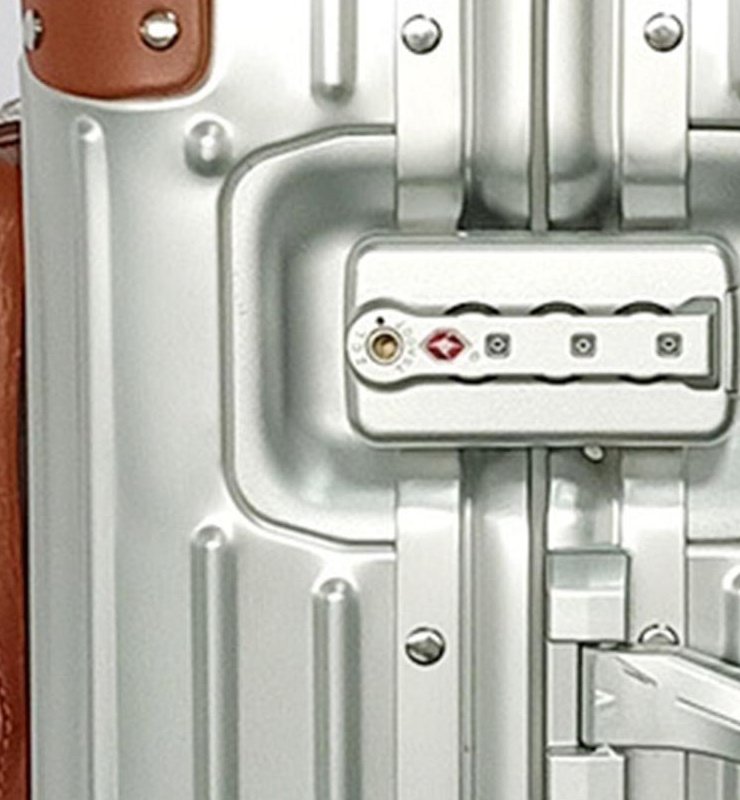
Map a lock to the closure it actually secures
A frame latch engages the case frame; a zipper lock retains compatible zipper pulls. On TS-003, the main-case TSA latches do not secure the leather front pocket’s zipper. If the brief requires locked device access, establish the pocket’s own closure and assess a suitable locking arrangement rather than pointing to the main lock.
Changing the pocket closure or adding a lock is a request to assess against that model, not a feature to assume. Review its attachment, surrounding space and operation together with the pocket and case. A request for higher resistance also needs corresponding evidence for the chosen configuration; a zipperless description alone is not a measured security grade.
Frequent access still needs a workable locking routine
Check where the dials, buttons and releases sit when the case is in its intended place. Does the user have to turn the case around? Must the main case be unlocked just to reach one item? Can the chosen compartment close correctly after the complete contents are returned? Evaluate the desired access and locking together, rather than solving convenience by leaving a required lock unused.
Inspection access is not a theft-resistance rating
Travel Sentry’s system provides a corresponding way for authorized inspection personnel to open and relock a recognized lock. Its own explanation states that no travel lock guarantees complete protection against determined theft. CATSA’s checked-baggage guidance also explains that a lock may still be broken if it cannot be opened for a necessary search. Do not promise theft-proof luggage or damage-free inspection from a TSA marking.
On the sample, check the final lock arrangement, release operation, engagement and closure with the intended load. If the brief includes durability, strength or resistance claims, agree the relevant configuration and verification separately. Ordinary opening and closing does not prove those claims. Our TSA lock selection guide covers identification, mounting and instructions in more detail.
When the contents need a different kind of case
A camera kit, instrument or working cosmetics collection can introduce requirements beyond ordinary travel packing. List each item, its packaging and accessories, but also describe what happens to it: carried between nearby locations, shipped, checked in, opened for a demonstration or used as part of a workstation.
Keep organization and protection separate. An insert can define positions and make items easier to find; it does not automatically establish the required protection during transport. Fragile or heavy equipment may call for a specialist protective structure and verification. That needs its own scope rather than a promise that any travel case can become an equipment case by adding foam.
The same distinction applies to cosmetics and field work. Carrying a closed set of supplies is different from working from trays, drawers or a supported open case at a venue. Identify the setup, cleaning and access requirements before choosing a construction. Send those requirements for a model and development assessment; a general customization service is not confirmation of a ready-made specialist product or a particular protection rating.
Keep the base model, change the interior, or review the structure?
Once the use is clear, separate what the customer wants to retain from what must change. A reference photograph may show the desired appearance, but it will not reveal the full opening path, internal space or hardware mounting. Ask for an open view and the actual item list as well as the closed exterior.
| Proposed change | What the design discussion needs to settle | What not to assume |
|---|---|---|
| Keep the case; change colors, identification or presentation. | Chosen material and model, finish reference, placement, hardware and packaging consistency. | That a reference color or process is available for every material and component. |
| Keep the opening; change pockets, dividers or an insert. | Items, access order, available space, installation and closure. | That internal changes have no effect on usable space or nearby components. |
| Change outside dimensions, the main opening or hardware mounting. | Case/frame arrangement, component fit and the development/tooling scope. | That it is a simple cosmetic update, or that every change necessarily needs new tooling. |
For example, a customer might retain TS-003’s shell and separate-pocket concept but request a defined device fit. Another might want a single-sided opening into the main packing area. Those requests can look similar in a short brief, yet they are not the same development task. Record the distinction before discussing a quotation or a sample schedule.
What to check on the sample for the intended use
A rendering can establish a proposed appearance. A usable product also needs the agreed contents, configuration and operations checked together. For this kind of project, structure the sample discussion around the actual journey rather than a general statement that the case looks correct.
Load the complete set, then follow the user’s actions
Use the devices with sleeves, samples with packaging and all intended accessories. Start with the high-frequency action: take the laptop out beside a desk, lift the tray onto the intended table, or return the complete gift set to its positions. Then include closing, lifting, moving and putting the case away.
Record the condition as well as the result. Which contents were used? Where was the case placed? What needed moving or support? If a layout is revised, keep that change tied to the model and configuration so that a later review is about the same proposed product.
Correct the cause of a problem, not only its appearance
If the laptop fits inside but cannot pass comfortably through the opening, adding nominal capacity elsewhere does not solve the access problem. If a charger is hidden below clothing, changing the lid may not solve the packing order. If a closure is difficult with the intended load, revisit item positions and the closure arrangement rather than simply forcing the case shut.
When a project asks for environmental, strength or transport-protection performance, define the corresponding verification separately. Practical access checks do not replace those results. Our metal luggage sample approval guide explains the broader approval record; here the focus is whether the agreed use can actually be carried out.
Tell us the use, the contents and what you want to keep
Send the intended users and market, the way they travel or work, and the complete item list with dimensions and weights. Include packaging and sleeves, the order of access, any storage limits and the lock requirements for each opening. Add a reference model or photographs showing both the outside and the open case, along with the brand direction and estimated quantity.
With that brief, we can discuss a base model and identify the finish, hardware, interior, packaging or structural changes to evaluate. You do not need to begin with a finished drawing, but the reference should show what the product needs to do, not only how it should look. Start a custom luggage discussion with those details so the proposal can connect your customers’ use to a specific case and sample scope.
Tell us about your luggage project
Share your preferred model, quantity and customization requirements.