How to Start a Luggage Brand
You can start a luggage brand by customizing an existing case or developing a new design. First, decide who your first product is for, what it needs to do and where you will sell it. Those decisions give the factory a practical basis for choosing a case, planning its configuration and quoting your first order.
If you already have a brand and a sales channel, begin with the needs of your existing customers. If this is your first luggage collection, identify the buyers you want the first case to attract. Either way, the plan needs to become a specific product: why someone would choose it, which features must stay, which details can change and how you will allocate the first batch.
When we develop custom metal luggage, we review these requirements alongside real models. A front pocket, wide trolley handle, T-shaped handle, different opening or particular interior can give a product its direction. The next step is to see how that choice works with the rest of the case, its appearance and its price.
Who is your first suitcase for, and what should it do?
Describe the job the customer needs the case to do before choosing features. “For business travel” still leaves a lot open. If buyers carry laptops and documents and want to reach them during a journey, you can start discussing the pocket opening, device protection and storage for the other items they carry.
Even within business travel, needs differ. One buyer values access from outside the case; another wants an uninterrupted packing area inside. Someone else cares about rolling the case with a laptop bag attached. Describing those actions helps the factory choose a suitable structure and gives you a reason for the wheels, handle and interior you select later.
Which requirements come from your sales channel?
If you sell online, the physical product needs to support the features on its product page. To promote a front pocket, show how items go in, come out and fit when the pocket closes. To promote organization, show the actual interior layout rather than just an empty case. Product information also needs finished dimensions, usable packing details and the supplied configuration; “20-inch” alone does not tell buyers enough.
If the first order is going to an established retailer or distributor, get its assortment, packaging and delivery requirements first. One channel may order sizes individually; another may display matching sets. Some need individually packed retail units consolidated for delivery to a warehouse. These details affect both the order mix and the packaging, so include them before asking for a quotation.
An established brand can also share products it already sells. If your range includes leather goods, laptop bags or business accessories, the luggage can coordinate with their leather colors, handle feel, metal finishes and logo placement. Decide which recognizable details you want to carry across, then discuss how to apply them to a suitcase.
Explain what you like about a reference product
Mark the details you like in a reference image: the overall proportions, flat panels, leather front pocket or shape of the trolley grip. Include the parts you do not want to keep. Otherwise, a proposal may reproduce the appearance you like while retaining an opening or interior that does not suit your product.
Separate requirements from preferences. A laptop fitting with its protective sleeve is a space requirement; a slimmer-looking pocket is an appearance preference. If the two conflict, your product positioning should determine which takes priority. Making that decision early keeps later design revisions focused.
Customize an existing case or develop a new shape?
If an existing model already serves the main purpose, you can keep its shell and opening structure and concentrate on branding, fittings and the interior. If the selling point depends on different proportions, a new opening direction or a new shell profile, include the relevant structural development in the project. Review the drawings, mounting relationships and tooling scope first.
An existing case can still become a distinctive product. Surface texture, color, handles, logos, lining, pockets, dividers and packaging should work toward the same product brief. Ask whether those choices help buyers recognize your collection and improve the use you are designing for.
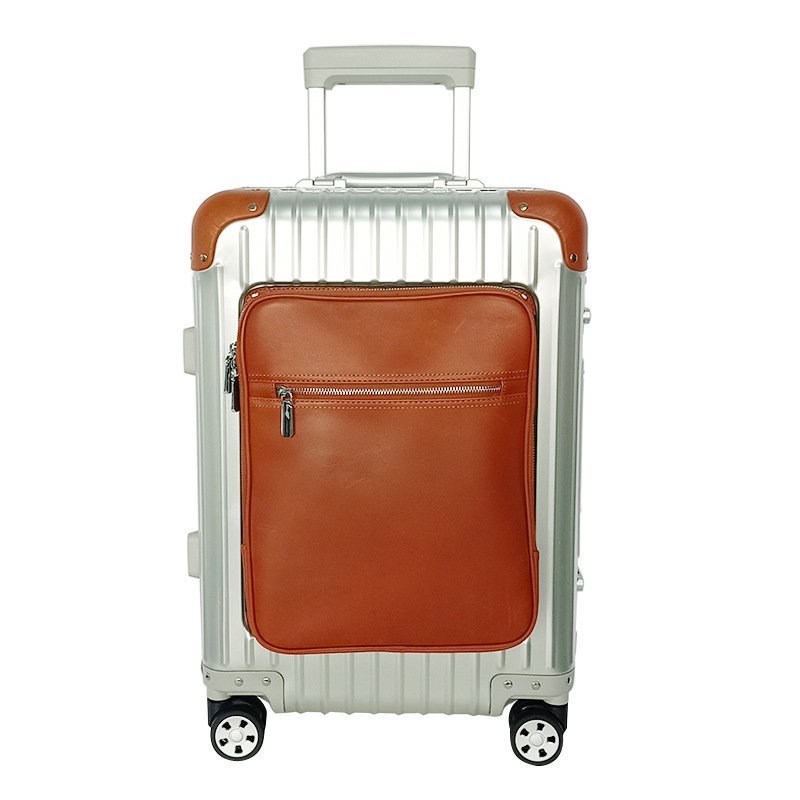
For example, if you want a metal case with separate access to documents or a device, start by reviewing the TS-003 front-pocket model. It has a separate zippered leather front pocket, while the main case uses a metal frame and TSA combination latches. Check the actual pocket opening, the device with its sleeve, the loaded pocket profile and how each compartment closes.
The main-case latches do not also lock the front-pocket zipper. If the front pocket needs a lock, specify that requirement separately.
If you want the main compartment to open from the front, or need substantially different case proportions, review the opening, frame, hinges and packing layout together. Describing that project simply as “adding a front pocket” could leave the work you actually need outside the quotation and sample.
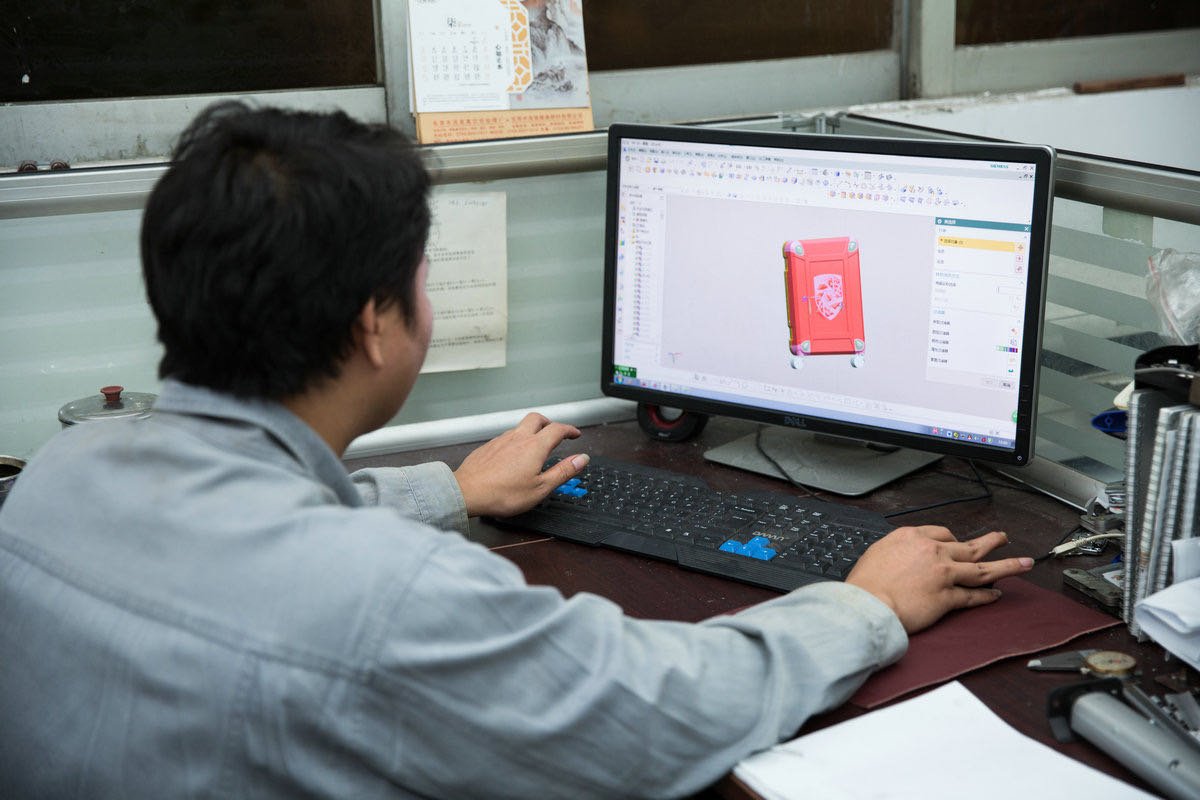
We can begin with a sketch, reference case, existing model or your drawings, then use CAD, sample making and tooling development as the project requires. List the structures to retain, fittings to adjust and parts to redesign before agreeing on the work and deliverables. Our guide to OEM and ODM luggage projects explains how drawing responsibilities, files and development work can be divided.
If you have your own design, identify what must stay
A brand with a developed design can provide its current drawings and specifications, marking the shapes, dimensions and functions that must remain. When the factory proposes manufacturing or assembly changes, both sides can distinguish acceptable adjustments from changes to the product’s defining features.
If the distinctive element is a grip or interior, development can focus there. A new carry handle does not mean every shell needs new tooling, but its mounting and folded position still have to fit the case. Break the scope down by the parts that actually change so you can see where the development investment goes.
How should the exterior, fittings and interior work together?
Choose the product’s most important use first, then coordinate its appearance and configuration around that. For each added feature, consider where it takes up space, which actions it affects and whether the customer values it enough to accept the resulting price and space trade-offs.
Make trolley handles, carry handles and storage work together
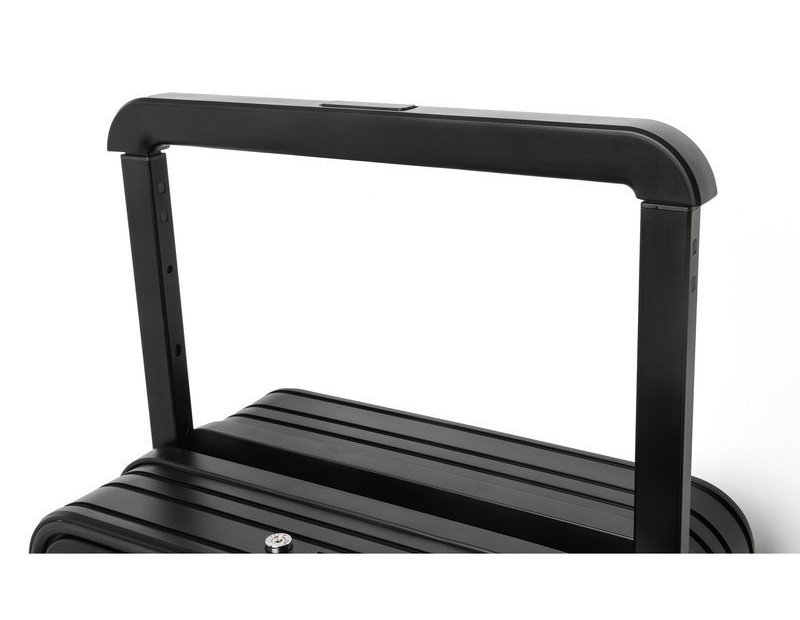
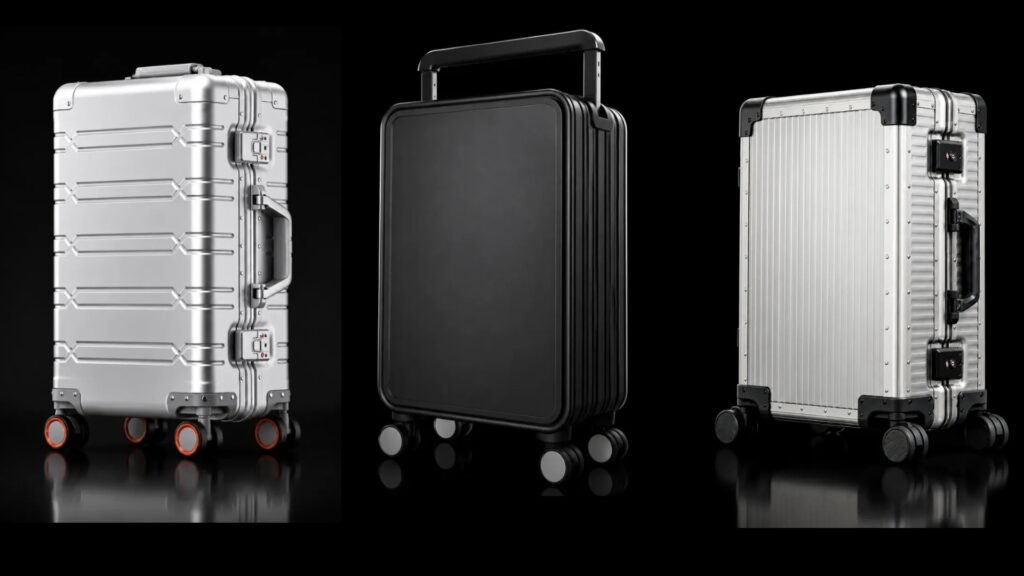
The TS-005 provides a starting point for a wide-handle design. Its broad grip spans the back of the case, with a telescopic tube toward each side. Review the tube channels, mounting positions and interior layout to see how your intended contents will fit. The positions of two tubes in a photograph do not establish the finished packing space.
If customers slide a laptop bag over the handle, test the bag you plan to pair with the case. Can its pass-through sleeve clear the grip? Does it move around once fitted? Can the user still reach the release button and carry handle? An adjustment intended to support the bag also needs to leave room for the hand and for retracting the handle.
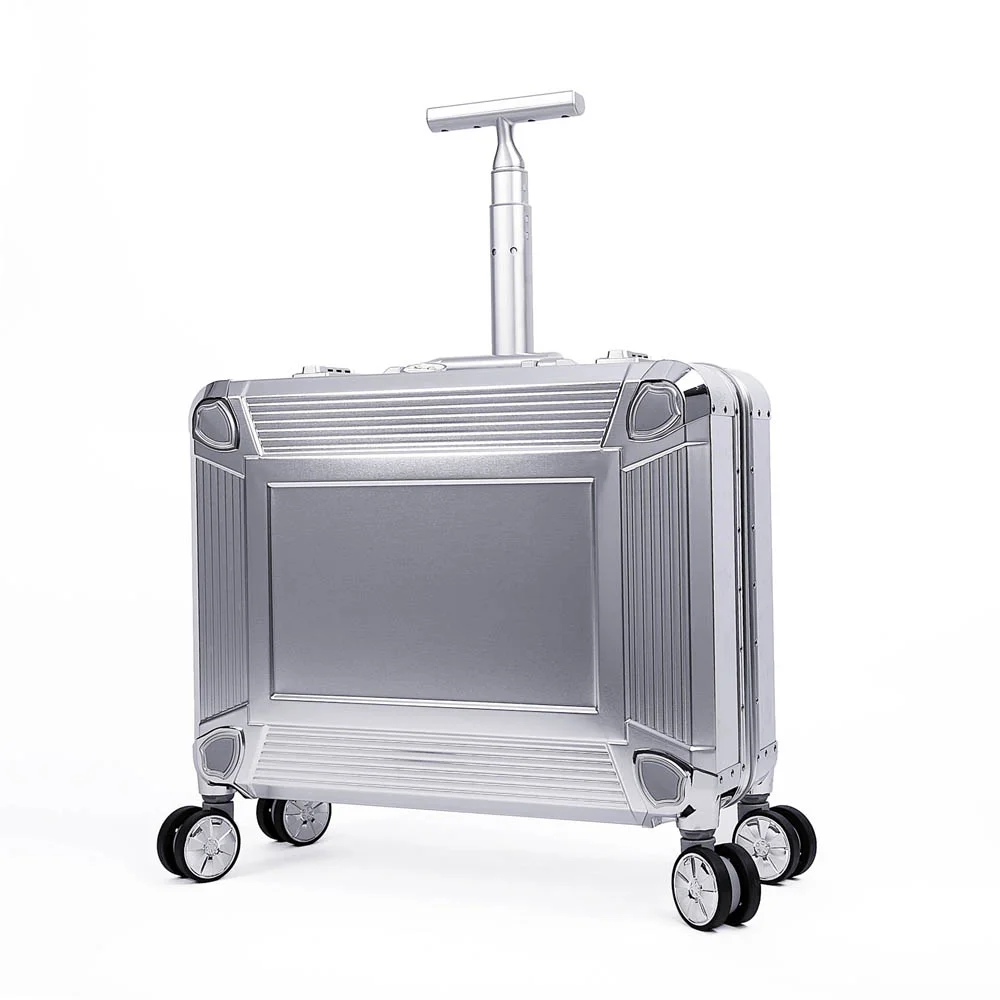
The YCT-006 combines a central telescopic stem with a horizontal T-shaped grip, offering another direction for a business collection. If you want a laptop sleeve or document divider, plan it around the actual items and the order in which users reach them. Then check how it fits around the handle mounting structure. These additions need to be specified as part of your configuration.
You can coordinate the carry handle with the same design: a rounder grip, a covering that matches your existing leather goods or a metal base that works with the latches. Once the shape is chosen, check finger clearance, how far it projects when folded and whether it interferes with opening the case. The handle should fit the collection visually and work properly on the assembled product.
Compare the shell, frame and hardware colors together
After choosing “silver” or “black,” compare texture and reflection as well. View the shell, frame, corner guards, latches and handle bases together to judge their color and gloss. Parts made from different materials or finished by different processes can look different even when they share a color name.
For example, YCT-006 uses an aluminum-magnesium alloy shell with separate zinc-alloy corner guards. If your brand requires a coordinated appearance, define the finish for each part and review them together on an assembled sample. Approving a shell color sample alone does not settle how the other silver parts should look.
Include logo size, position and attachment in that review. Applying the same mark to a shell panel, front pocket or metal badge involves different materials and mounting details. Surface texture and nearby latches or rivets also affect its appearance on the complete case.
Build the interior around what customers carry
Pockets, dividers and compartments should make items easier to pack, find and remove. For a laptop-and-document layout, include the sleeve, charger and cables when planning space. Measuring the bare laptop alone may leave a compartment that fits the computer but not the complete set of belongings.
For clothing, first consider how the main compartment opens, divides and holds items in place. Then decide how many pockets it needs. Thicker dividers and extra pockets change how the interior packs. Load the sample and check whether pockets remain accessible, whether the two sides press against each other and whether the lid closes properly.
These decisions involve several parts working together. Our guide to suitcase parts and configuration choices explains their structures and mounting relationships. For your first product, start by defining how you want the customer to use the whole case.
How should you split the first order by model, size and color?
Base the first assortment on existing orders, channel requirements and your stocking plan. If a distributor already knows which sizes and colors it wants, use that demand to plan the mix. If demand is less clear, list the main options and calculate the stock and samples needed for every additional combination.
One model in two sizes and three colors creates six size-and-color combinations. If one color also has a different interior, record that separately. Even when the cases belong to one visual collection, purchasing, warehouse and sales teams need to identify each version.
Write the quantity breakdown as “model—size—color—interior or other special configuration—quantity.” Fill in confirmed channel demand first, then allocate the remaining stock. This separates known requirements from colors or sizes you want to test and gives you a useful record for reorders.
Match the minimum quantity to the customization scope
For color, lining and similar customization on our existing aluminum luggage models, orders start at 300 pieces per model. Available sizes and colors within the same model can be combined toward that quantity; each size and color does not need a separate 300-piece order. List the configuration and quantity of each version because their unit prices may differ.
Two models at 150 pieces each do not automatically make one 300-piece model order, even if they use the same material. List the models separately and confirm the ordering conditions for the configuration retained and changed on each. If the existing colors, interior and hardware already suit your product and you only need branding, discuss that specific scope separately.
A size that the model does not already offer also needs a shell, frame and related structural review. How quantities can be combined is a different question from whether existing tooling can produce the requested size. See our guide to custom luggage minimum quantities and mixed sizes and colors for the detailed order arrangements.
Calculate sets and individual cases separately
If you sell matching sets, the quantities in each size need to make the intended number of complete sets. Meeting a total order quantity can still leave unmatched sizes or colors. If the channel sells both individual cases and sets, list those needs separately before deciding how to allocate the remaining stock.
Packaging should follow the sales arrangement. A matching collection is not automatically suitable for nested shipping. Check whether the cases fit inside each other, whether the interiors are compressed, how surfaces are protected and how the shipment will be separated at the warehouse. The advertised retail set, actual packing method and receiving unit should agree.
Which costs belong in your first-order budget?
First, define whether your budget means the product unit price, the total goods value or the full amount needed to reach a particular warehouse. Those are different comparisons. Putting a factory unit price next to another offer that includes freight will not show you where the price difference comes from.
Build the first-order budget in stages. Multiply each size and configuration quantity by its unit price, then add them to find the goods total. Add design, samples, tooling and other development costs that are not included. Finally, list separately arranged packaging, inspection, transport and destination costs. Do not count a cost again if it is already included in the unit price.
If your brand supplies an established channel, put its actual requirements into the quotation: retail boxes, hangtags, barcodes, carton labels, individual packaging and the required delivery arrangement. Agree which items come from the factory and which you or another service provider will arrange.
Compare prices against the same product requirements
If one option keeps the existing dividers and another adds a fitted interior for a laptop and accessories, compare the work and cost of that change first. Changing the wheels, finish, interior and packaging at the same time makes two total prices a poor guide to value.
Development costs also need to identify the affected parts. A new grip, an interior adjustment and a complete new shell design involve different work. Specify what will be made, what will be delivered and what the sample will show so you can decide whether the investment supports your product’s selling point. Our guide to metal luggage manufacturing costs and first-order budgets explains quotation comparisons in more detail.
Recalculate the total when the quantity increases
If a larger order brings a lower unit price, review the extra goods payment, stock, storage and sales plan together. A lower price per case does not necessarily reduce the money needed for the first batch. Identify which channel will sell the additional units before deciding whether the larger quantity makes sense.
List payment stages as well. Record who arranges samples, development, production, inspection and shipping, and at which stage, according to the project agreement. This shows which payments fall due before the first batch reaches your warehouse, rather than only the final total.
For a launch date, work backward from when the goods actually need to arrive. Include sample revisions, configuration approval, material preparation, production, inspection, transport and receiving. Projects with a new structure, specified components or several sample revisions need a schedule based on that work; another model’s delivery plan is not a reliable substitute.
How do you approve samples and prepare the first delivery?
When the sample arrives, try it for its intended use, then put the confirmed configuration into the order record. Brand, purchasing, design and sales teams should make decisions against the same sample and specification version, so different photos or requests do not drive the project in different directions.
Use the sample to check the features you plan to advertise
If the selling point is easy laptop access, pack the laptop with its sleeve and the other items the user will carry. Open the compartment, remove the device, put it back and close the case. For a front-pocket model, also check the loaded pocket’s projection, access to the carry handle and latches, and how the pocket and main case close separately.
If you plan to promote rolling the case with a bag attached, fit the intended bag and try gripping, rolling, turning and lifting under the same loading conditions. Record the specific awkward action before choosing a modification: does the bag block the carry handle, does its sleeve fit poorly, is the button covered or is there too little grip clearance?
Keep each revision in one change list, distinguishing approved items, changes required and items the sample has not yet shown. Temporary fabric, an outstanding final color or packaging that did not arrive with the sample each needs its own review before being recorded in the final configuration. Our metal luggage sample approval guide expands the individual checks.
Match packaging and product information to the final version
Use the approved configuration to prepare the model, materials, finished dimensions, empty weight, colors, interior and packaging information for sales. Dimensions and weight should come from records for the corresponding sample. A “20-inch” model name is not a complete specification or a basis for promising the same cabin acceptance to every customer.
Product photographs should show what that version actually includes. The main image establishes overall proportions; detail images show the front pocket, handle, latches or interior. If a handle, wheel or divider changes after the shoot, check whether the existing images still represent the delivery version and update the sales copy to match.
Distinguish the individual product, retail set and shipping carton in packaging records. Included accessories and instructions, carton model and color identification, quantities and receiving information should match the order and packing list. Check channel barcodes, labels and carton marks together before production packing.
Keep spare-parts and reorder records from the first batch
If you plan to provide replacement wheel units, handles or other parts, discuss the matching components, mounting positions, replacement method and supply arrangements when confirming the configuration. Two similar-looking wheel units may fit different positions or mounting bases; color and diameter alone do not identify the correct spare.
Keep the final model, size, color and configuration with its sample version and component details in one product record. Reorders can use that baseline. If you change fabric, latches or wheels, list the change separately and review its effect on appearance, mounting, use and packaging data before updating the version.
Once sales begin, record performance by size, color and channel alongside return reasons and user feedback. A slow-selling color needs a different response from a front pocket that is awkward to use. Use those specific findings to decide whether the next batch needs a different stock mix, a component improvement or another model.
To plan your first product with us, send your target customers, sales channel, reference styles, required functions, first-order quantity, budget range and intended warehouse arrival date. Through our custom luggage and product development service, we will compare your brief with existing models and your design requirements, separate retained configurations from development work, and set out the product options, quotation scope and sample checks. Once those requirements are agreed, they become the basis for planning your first order.
Tell us about your luggage project
Share your preferred model, quantity and customization requirements.