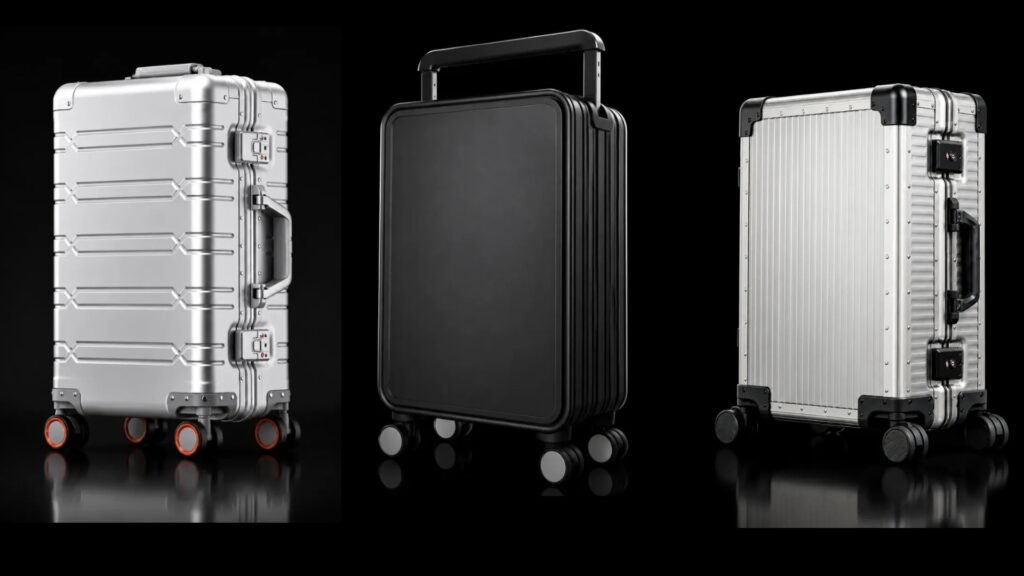
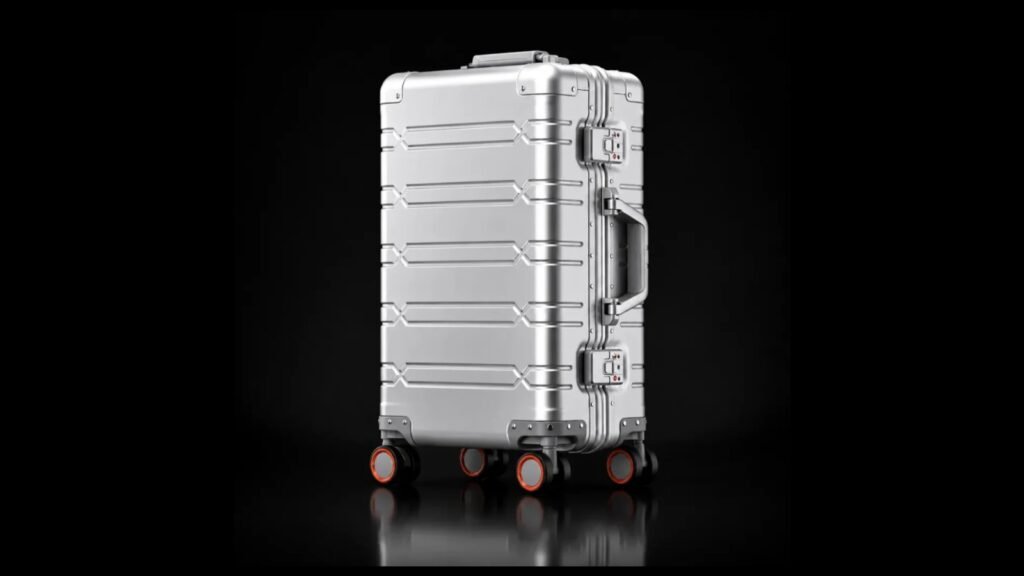
How to Clean Aluminum Luggage
For ordinary dust, fingerprints, and travel grime, lift loose grit first, wipe the affected area with a soft cloth wrung out in clean water, and dry it. If the spot is still sticky, treat it as adhesive residue. If a shiny patch or groove remains when the shell is dry, or the case has changed shape, stop wiping and check the finish or the part that was hit.
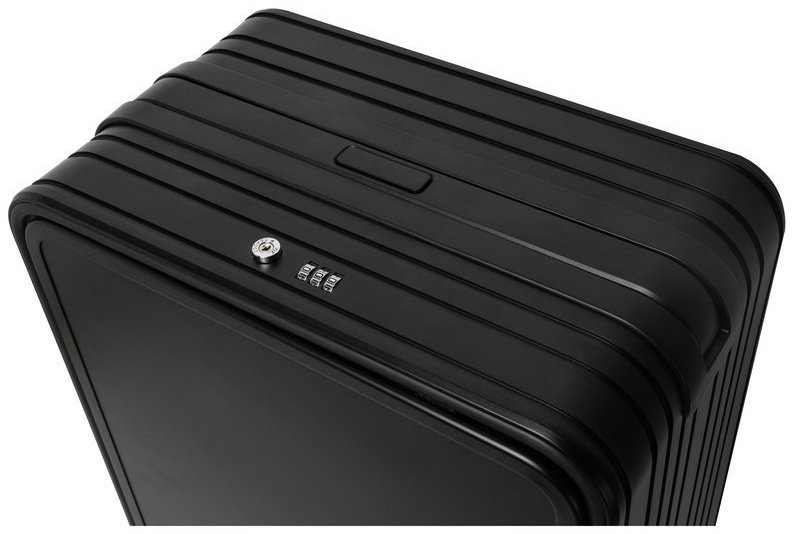
Take our matte black TS-005 carry-on. After removing an airline sticker, you might see a shiny outline on the matte anodized shell. Glue, a difference in appearance where the sticker covered the shell, and abrasion can look similar in a photo.
If you handle support for a luggage brand, start by asking if the area still feels sticky and what the customer has already used on it. Those details tell you more than another round of rubbing.
Is it dirt, sticker residue, or damage?
| What you see | What to do first | When to stop |
|---|---|---|
| Loose dust, fingerprints, or a light rub mark | Lift loose grit, wipe the area lightly with a clean, damp cloth, and dry it. | If the mark remains or the area has a different sheen after drying, take photos for support. |
| A sticky area where a label came off | Peel back any loose paper that lifts easily and clear the dust around it. Use the care instructions for your case to deal with the adhesive. | Pause if the glue touches a printed area, you have no applicable care instructions, or a spot test leaves whitening or a change in sheen. |
| A groove, dent, or misaligned frame | Photograph the affected area and note how close it is to a corner, latch, frame edge, or wheel mount. | If the case becomes hard to latch, the frame sits unevenly, or a wheel rubs, set the case aside and ask support to inspect it. |
Let a wiped area dry before you judge it. Look straight at it and then from an angle. If the mark has faded, stop there. If a groove remains or the spot looks shinier under light from the side, have the finish checked. Repeated rubbing on a matte panel can change its sheen and leave a patch that stands out.
After a corner impact, check how the case closes and rolls. A close-up of the dent alone gives little context about the nearby frame or wheel mount. Take a photo of the whole case and a close-up. If the latch is harder to close or a wheel rubs in the same spot each time it turns, show support where that happens. If you are comparing how different finishes show wear before placing an order, see the aluminum luggage finishes guide.
How to wipe off dust, fingerprints, and rain
- Lift the grit first. Retract the handle. Use a clean, soft cloth or soft brush to lift loose grit from the shell, rim, and grooves. Use a separate cloth for the wheels so dirt stays off the shell.
- Wipe the spot with a well-wrung cloth. Dampen the cloth in clean water, wring it out, and work in small areas. Follow the direction of the grain where a brushed finish has a visible grain. Use a drier cloth around lock openings, seams, handle openings, and logos.
- Dry the area and take another look. Use a second clean, soft cloth to remove moisture. If a fingerprint remains, choose a cleaner listed for the finish, test it in a hidden area, and compare the color and sheen once the spot is dry. Clear any remaining grit before wiping again.
After a splash of rain or salt water, wipe the shell and hardware when you reach a dry place. Where salt water touched the case, use a cloth wrung out in fresh water to lift the residue, then dry the area. Open the case and check the bottom corners, lining, and frame edges for moisture. Let damp areas dry before storage and check how the case opens and closes if water reached a lock or seam. To see where water can get in on different case designs, read the guide to aluminum luggage and water resistance.
What to do when a sticker leaves glue or a shiny outline
Start at a loose corner and peel slowly. Look at what remains. You may see bits of paper, a sticky patch, or an outline with no tack. If an old label resists peeling, leave it in place until you can check the care instructions. A metal scraper can score the shell, and an abrasive pad can change the sheen around the sticker.
If the area is still sticky, lift the dust around it first. Use an adhesive remover only where the care instructions cover both the shell finish and the affected area. Test it out of sight, keep it local, and stay clear of printing, leather, and seams. An alcohol-based wipe listed for another brand may be meant for a different finish. Strong adhesive removers and nail polish removers can change the sheen or damage printing. Check what the product can touch as well as what it can remove.
If you have no care instructions for that case, stop after lifting loose bits of paper and clearing the surrounding dust. For example, if residue on a TS-005 crosses the edge of a printed logo, take a photo that shows both the glue and the print. Send the case model, color, and anything you have already used to the brand’s support team so they can check which surface is involved.
If the area feels smooth and only an outline remains, dry it and compare it with the surrounding finish under the same light. For a shiny, pale, or discolored patch, give support the before-and-after photos if available and tell them what touched the finish. That helps them decide what to inspect before suggesting another product.
What to check when a wheel drags or a latch sticks
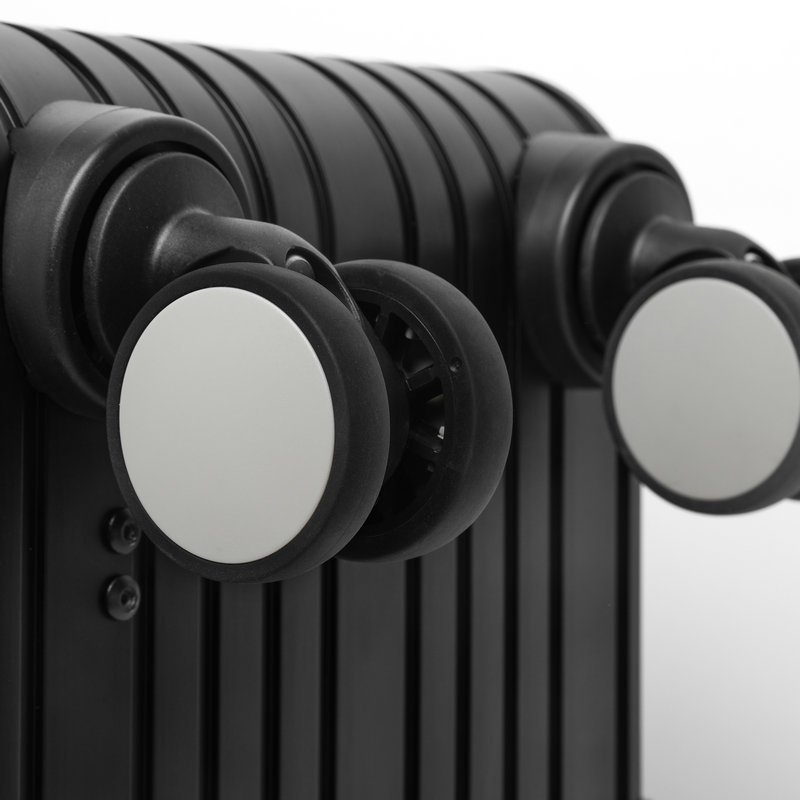
Find the wheel that drags. Roll the empty case on a level floor. Support the case securely and turn each wheel by hand. Brush away visible grit or threads from the tread and the outside of the housing, then compare it with the other wheels. If one still makes noise, wobbles, or rubs in the same place on every turn, send the wheel position and a short video to support. Match any replacement to the wheel mount and the model. See the guide to luggage wheels and mounting styles.
Try the latch with the case open. Wipe visible dust from the outside of the latch with a dry, soft cloth. If it moves freely while the case is open and gets stiff only when you close it, check whether contents are pushing on the lid, the frame edges line up, or a corner has taken a hit. If the problem persists, send a short video of the empty case opening and closing. Forcing the latch can make alignment problems worse, and oil can carry grit into the mechanism.
Wipe the exposed handle tubes. Extend the handle, remove dust from the exposed tubes, and dry them before lowering it gently. Notice whether both sides catch or whether the handle sticks at one height. If it still binds, the grip sits crooked, or the button stops working, show support how it moves. Check the service instructions for that model before taking the handle apart.
When is the lining dry enough to store the case?
Lift out sand and crumbs first. If liquid spills inside, blot it with a clean, soft cloth. Where the fabric allows spot cleaning, work lightly from the edge of the mark with a well-wrung cloth and blot away the moisture. Pocket bottoms, binding, and stitched seams often take longer to dry than the exposed fabric. Open the pockets and dividers so air can reach them, then close the case for storage once those areas are dry. Follow the material-specific instructions for leather and coated fabrics.
If the surface feels dry but a pocket stays damp or an odor persists, tell support where the water entered and which parts got wet. Check bonded linings, layers, and fixed dividers as part of that review. When you change the lining fabric or color for a custom order, check spot cleaning and drying on the approved sample. The lining and sample guide covers what to look at when choosing those materials.
What should a brand approve before printing a care card?
Approve the care directions alongside the appearance sample. For a matte black TS-005 project, start with a swatch that matches the actual finish and color. Try the planned wiping method there, then check the logo area, rim, and hardware seams on the assembled sample. The swatch shows how the finish responds. The finished case shows where the same method can touch printing or another material.
- Record how you tested it. List the model, color, finish, logo method, and lining. Record the product, how you applied it, and where you tried it so someone else can repeat the check. Leave an untreated patch for comparison. Once the sample is dry, compare the color and sheen under the same light and angle. If you see whitening, a sheen change, or color transfer, identify the affected area before approving the method.
- Write directions the owner can follow. Say how to wipe the shell, what to do about residue, how to care for the wheels and lining, and when to contact support. Tell the owner to include the model, a photo of the affected area, and any cleaner already used.
- Recheck the instructions when the configuration changes. A new color or finish calls for a shell check. A different lining calls for a spot-cleaning and drying check. A new wheel assembly calls for a review of its cleaning and spare-part instructions. Keep the care-card version with the signed-off sample.
Suppose an adhesive remover leaves the black finish swatch unchanged, but color transfers from the edge of the printed logo on the assembled sample. Give the shell and the printed area separate directions. Once routine wiping is approved on the finished case, the card could say:
Lift loose dust, wipe the shell with a well-wrung soft cloth, and dry it. If sticker residue touches a printed logo, photograph the spot, note your case model, and contact support.
If you name an adhesive remover on the card, include the approved directions and the exact areas where it can be used.
If a warehouse finds the same shiny patch on several new cases during unpacking, keep the carton IDs, packaging, and photos of the whole cases. Compare them with the approved sample and check whether the mark lines up with a protective layer or a contact point inside the carton. That gives the brand and factory a way to decide whether to review cleaning, packing, or the finishing process. For a case that has already been used, start with when the mark appeared, what happened on the trip, and what was used to clean it.
Tell us about your luggage project
Share your preferred model, quantity and customization requirements.