Aluminum vs Polycarbonate Luggage: How to Choose for Your Brand
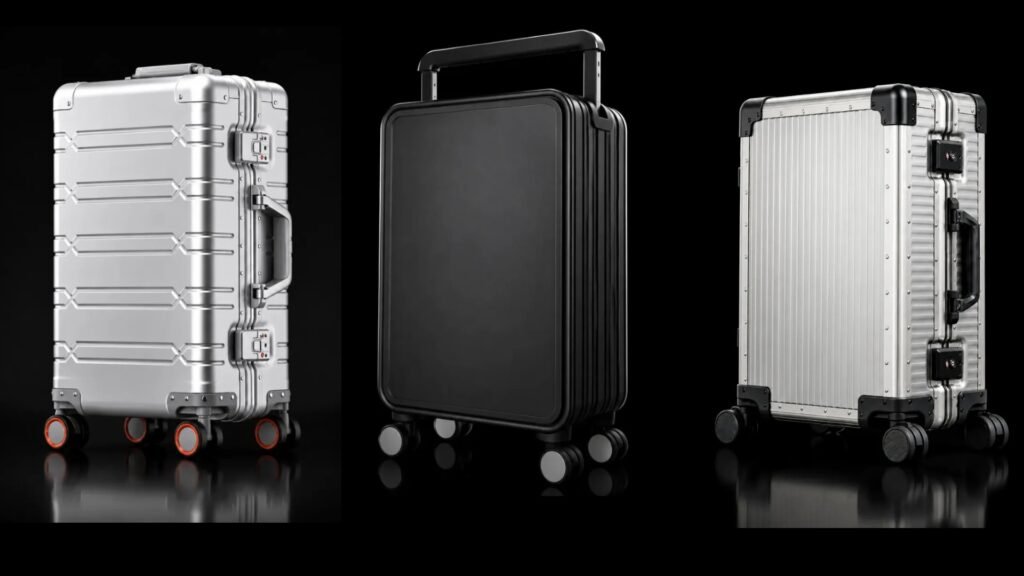
If a metal shell, frame and latch design define your new collection, start by evaluating an aluminum-shell case. If low empty weight is the main requirement, a polycarbonate (PC) option deserves an early comparison. If you want a PC shell with a framed latch closure, assess that hybrid construction as a third option, using the complete case.
When we discuss metal luggage development with brands, the material choice needs to become a specific product: its size and weight targets, essential features, finish and bulk-order configuration. Using our aluminum luggage models and manufacturing information, this guide explains how to compare aluminum and PC on consistent terms and which decisions to make before sampling.
1. Identify the Shell, Frame and Closure
Start with the shell, then look at the frame and opening system. An aluminum-alloy shell, a PC shell with an aluminum frame and a metallic-colored plastic shell are different constructions. A silver finish, ribbed design or metal latch does not establish what the shell is made from.
In our aluminum luggage range, aluminum refers to the shell material. It does not mean that the wheel brackets, lining, locks and every fastener are aluminum. For a PC option, distinguish PC, PC/ABS and the actual multilayer sheet construction rather than treating them all as the same plastic shell.

| Option | Requirements Worth Evaluating First | Trade-Offs to Review |
|---|---|---|
| Aluminum-alloy shell | A real metal surface, rigid shell panels and a framed latch design | Finished weight, forming and finishing costs, and visible wear |
| PC shell | A low-weight target, with solid colors, metallic colors or textured shell designs | Sheet specification, local geometry, finished weight and load response |
| PC shell with an aluminum frame | A PC shell combined with a frame and latch closure | Additional frame and hardware, shell attachment and closing fit |
Different Shell Processes Mean Different Development Work
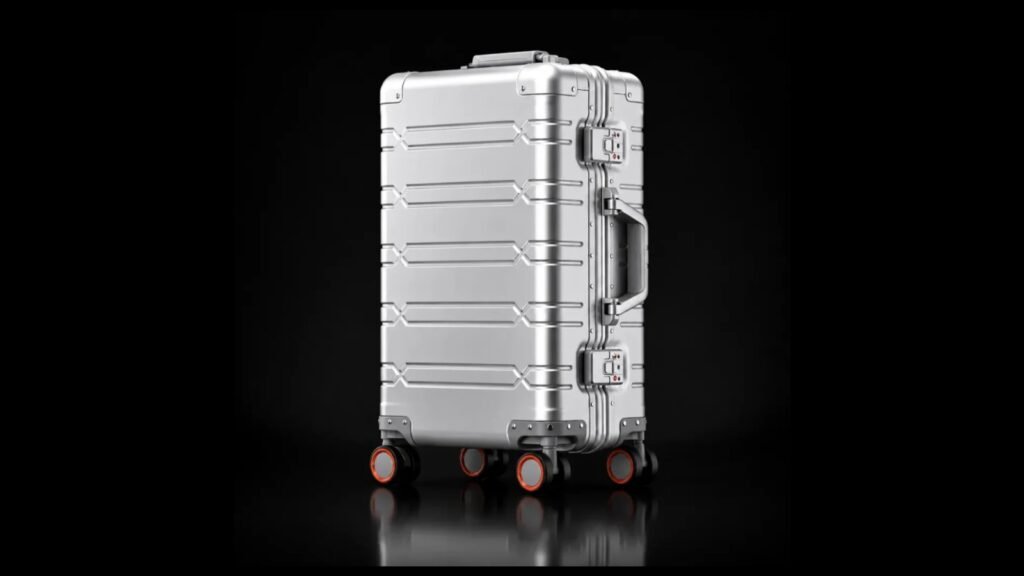
Our TS-006, for example, uses hydraulic stamping to form aluminum shell panels. After the sheet is formed in the tooling, the panels need trimming and hardware holes before finishing and assembly. The shell profile, edges and hardware positions are related parts of the development work.
Thermoforming a PC sheet involves heating the thermoplastic sheet, forming it against a mold and carrying out secondary work such as trimming. The sheet construction, thickness distribution after forming and local geometry all need review. Changing an aluminum-shell design to PC, or the reverse, is therefore more than a color change. The original shell tooling and mounting arrangement cannot simply be assumed to carry over.
2. Separate Cosmetic Damage from Functional Failure
A sufficiently hard local impact can leave a permanent dent in an aluminum shell. To judge whether the case still works, look at the location. A mark on the shell face is different from deformation near a corner, frame or latch. In those areas, check whether the frame halves still align, the latches engage normally and the hinges and mounting points remain functional.
A PC shell can respond to load by flexing, but that does not mean it will recover fully from every impact. The material specification, wall thickness and geometry around corners and openings affect its response. Cracking can occur when local limits are exceeded. Pressing a shell by hand and seeing it spring back shows that particular response; it does not replace evaluation of a complete, loaded case.
Record cosmetic changes and functional results separately during sample review. Your brand can agree an acceptable range of surface marks. Difficulty closing, loose mountings or cracks require assessment of the affected area and the appropriate response. Fewer scratches do not establish the endurance of the wheels, trolley or latches.
If the product will carry fragile equipment, include internal restraint and cushioning in the design. Neither a metal face nor the name PC establishes the protection the contents need. Define the contents, restraint arrangement and evaluation conditions rather than treating shell-material test results as proof of complete-case performance.
Intended use also affects evaluation conditions. For a range sold into cold regions or used outdoors for extended periods, include the relevant environment and loading conditions in the review, then determine which materials and components need evaluation. An indoor display sample cannot answer all those questions. An aluminum shell does not remove the need to consider the wheels, locks and lining.
3. Compare Finished Weight and the Features Included
Set a finished-case weight target, then decide which features are essential. If one sample has a front pocket, frame latches and a device compartment while another has a simple lining and zipper closure, the measured difference includes both material and feature differences. It cannot all be attributed to aluminum or PC.
List external dimensions, usable interior space, wheels, trolley, closure, lining and included accessories before weighing. State whether inserts, dividers and other removable items are included. For freight planning, record protective packaging and carton dimensions and weight separately. Empty-case weight and packed shipping weight answer different questions.

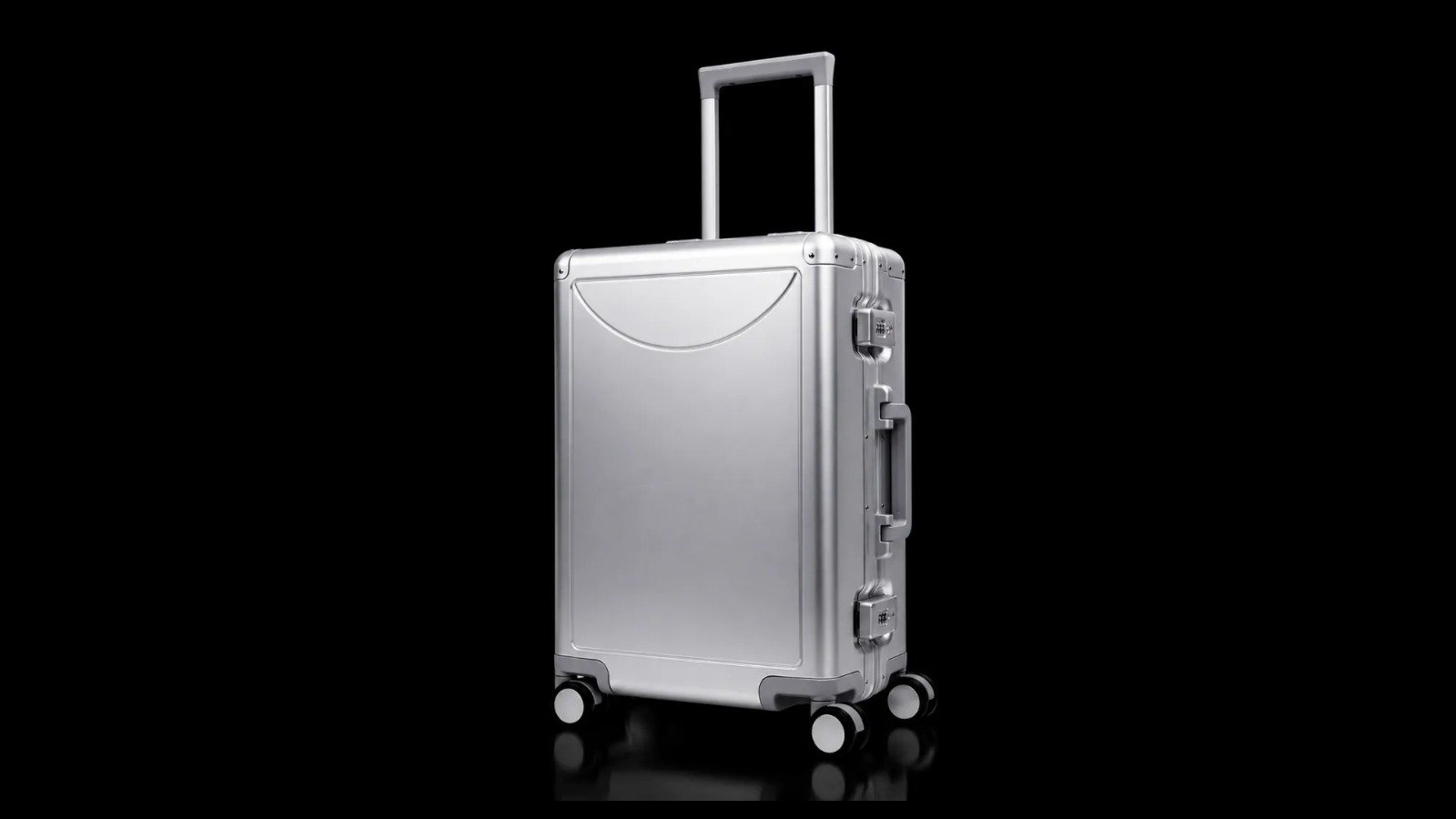
Our TS-003 illustrates why configuration matters. It has an aluminum main case and a separate zippered leather front pocket. The pocket can be accessed without opening the main compartment. If your brand needs that function, consider the pocket material, opening, attachment and usable space as part of the product rather than comparing shell panels alone.
Comparing materials and selecting a finished product are different tasks. To understand the material’s contribution, keep dimensions, capacity and configuration as consistent as possible. To select a product for sale, you can compare different constructions, provided you list the weight difference alongside the features gained. A front pocket, for example, should be assessed against access needs and the weight target. This makes useful differences visible without confusing them with a controlled material comparison.
4. Review Finish, Color and Logo as One Design
For a metal appearance, discuss the base material, texture and coloring method together. Brushing or blasting is not the same operation as anodizing: mechanical preparation changes the surface texture, while anodizing forms an oxide layer on the aluminum. The substrate and preparation still affect the final appearance, so a color name alone does not define the finish.
The standard TS-005 has a matte anodized finish. For customization, we review color, texture and logo method together and confirm the appearance on a sample. If you want a different gloss level or printed artwork, discuss it with the finish rather than leaving the branding method until the shell appearance is already approved.
PC sheets also offer solid and metallic colors, gloss levels and textures, but a metallic-colored PC surface is not the same finish as aluminum. When adding aluminum to an existing PC range, you can carry through a color direction, logo position or design detail without expecting the two substrates to look identical under every light.
Review the case face, corners, frame and logo together. Screen images help communicate direction; the approved physical reference establishes the appearance to follow. Agree scratch or abrasion requirements separately. Matte, brushed and anodized are finish descriptions, not promises that a case will show no wear.
5. Turn Brand Positioning into Product Requirements
For development, premium, lightweight and business need to become requirements that can be assessed. We recommend defining three groups: the design and functions you must retain, the weight and purchasing-budget limits, and the configuration details you can adjust. Their priority changes which option makes sense.
If a real metal shell and framed latch appearance are essential, start with an aluminum option and review its wheels, trolley and interior. If empty weight comes first, compare lighter configurations that meet the space and operating requirements, deciding whether a frame and front pocket are necessary. If both are firm requirements, assess the complete sample and budget together to establish feasibility.
Target retail price helps define the product’s fit with your sales channel; the purchasing budget helps define the configuration. Provide them separately. We can then discuss the aluminum case’s construction, finish and hardware. Rolling, handle extension, closure operation and interior workmanship still need to deliver what your brand promises. The material name does not replace those requirements.
6. Align Development, Unit and Delivery Costs
Split the comparison into development, finished-unit and delivery costs. Development covers an available platform, the changes required, possible tooling work and sample revisions. The unit comparison covers the actual shell, finish, hardware and interior. Delivery adds the agreed packaging, quantities and trade terms.
Stamping, edge processing, finishing, frame fit and assembly all contribute to an aluminum-case quotation. A PC option also needs a defined sheet, formed construction, closure and component package. Raw-material prices alone cannot establish the finished-case price difference. Without matching scope, a lower quote may simply exclude a feature or delivery item.
For our existing aluminum models, distinguish appearance and configuration changes from shell or mounting changes. Color, logo or interior work that suits the existing model can be developed around that construction. A different shell outline, size or hardware mounting position needs a review of the tooling and components affected. Listing that work separately makes the difference between an existing-model program and new development clearer.
Delivery costs also depend on packing. Compare protective materials, individual package dimensions, units per carton and packed weight rather than using empty-case weight alone to judge freight. Any spare parts shipped with the order should have defined models, quantities and quoted terms rather than being left under a vague after-sales heading.
List first-order quantities by model, color and size, then check the relevant minimums and development conditions. A brand adding aluminum to a PC range can assess the new model’s development, first order and spare-parts arrangements separately. It does not need several unconfirmed models simply to offer more materials. Our metal luggage manufacturing cost guide explains how these items enter a quotation.
7. Decide What an Aluminum Model Adds to Your Range
The following planning scenarios illustrate the choices. An aluminum model should fill a specific role rather than automatically replace every case in your collection.
Add a Model Built Around a Metal Appearance
Your PC collection can continue serving its existing low-weight requirements while the aluminum model focuses on its metal surface, finish and framed latch design. Select one model and a main size, confirm the complete sample, quotation and spare-parts arrangements, then decide how many colors and sizes to add. This lets you assess the new product without changing the existing range at the same time.
Give Carry-On and Checked Sizes Different Features
Match size planning to the platforms available. TS-006 currently lists 20-, 24- and 28-inch options, making it a possible starting point for a multisize collection. TS-003 currently lists a 20-inch version for reviewing a separate front-pocket requirement; it is not an existing matching set in larger sizes. Review the construction and development scope of any size extension separately.
If access matters most in the smaller case and main-compartment space and loaded rolling matter more in the larger one, specify them separately. Color, branding and design details can keep the range consistent without repeating every feature in every size.
Wait if Weight or Budget Still Does Not Fit
If the complete aluminum configuration has not met your weight target, or additional models put first-order quantities and development costs beyond budget, refine the candidate or defer the new material line. Resolve the issues that affect purchase and delivery before expanding the range.
8. Assess PC with an Aluminum Frame as a Separate Option
A PC shell with an aluminum frame is worth evaluating when you want to keep the PC shell design but use a framed latch closure. If a zipper already meets the product requirements, decide whether the extra frame is justified by the appearance, operation and weight target.
On the assembled sample, check shell-to-frame attachment, hinge and latch positions, frame alignment and closing operation with the interior fitted. The frame and hardware belong in the finished configuration, so the weight and quotation for a simpler zippered PC sample do not carry over. If expansion is required, discuss that construction separately rather than assuming a framed case works like a zippered model with an expansion section.
Keep the hybrid on the shortlist when its closure appearance and operation meet the brief, its configuration fits the weight and budget, and the usable interior remains suitable. Those are the decisions that make the comparison useful.
9. Fit the Wheels, Trolley, Locks and Interior to the Case
Once the product direction is selected, assess the installed components. Wheels, trolley, locks and interior fit different mounting areas. A consistent branded appearance does not establish identical internal mounting.
Wheels: Check Mounting and Load Requirements
Review the mounting face, hole positions, assembly height and swivel clearance with the case base. Single or double wheels, diameter, tread material and detachable construction are requirements you can propose, not proof that any wheel assembly can be interchanged. Assess rolling on an assembled sample under the agreed load rather than selecting only by a TPE or PU label. Our luggage wheel types guide explains the options.
Trolley: Check Fit and Interior Space as Well as Width
TS-005 has a wide telescopic trolley, separate from the carry handle used to lift the case. For a different trolley, we review its dimensions, mounting positions and interior layout, then confirm fit and extension on an assembled sample. A similar-looking trolley on another shell still needs those checks.
Locks and Interior: Match the Opening to the Contents
Frame latches and zipper locks attach to different structures. Changes need a review of mounting and operating space. Device compartments, dividers, straps and inserts should follow the contents’ dimensions and restraint requirements. For the TS-003 front pocket, device fit depends on its outer dimensions and thickness, the pocket opening and the selected internal arrangement; screen size alone does not establish fit.
Repair and Spares: Separate Component Replacement from Shell Damage
Replacement wheels, trolleys and latches should be identified by model, mounting position and version. For a wheel replacement, for example, check its base and fasteners, access to the mounting points from inside and whether the lining needs to be opened. Those details explain the actual work better than a material-based repairability label.
Shell or frame deformation and cracks need a separate assessment of location and functional effects. An ordinary component-replacement plan does not resolve them. With the first order, discuss which parts to retain, how to identify and replace them, and their cost and supply arrangements. Agree the component scope and handling arrangements for the project.
10. Confirm the Selected Configuration Before Production
Turn the selected configuration into sample-approval requirements. If a display sample differs from the order, list the changes and confirm the dimensions, weight, appearance and functions affected on the final configuration. The following items should correspond to the final sample and provide references for production and inspection.

| Item | Review on the Sample | Keep as the Production Reference |
|---|---|---|
| Shell and construction | Material by part, outline, frame and opening system | Confirmed model and configuration |
| Dimensions and weight | Complete external dimensions, empty weight and interior arrangement | Measurement scope, units and agreed requirements |
| Finish and logo | Color, texture, gloss, position and branding appearance | Approved physical appearance and artwork |
| Hardware and interior | Rolling, trolley extension, latch operation, contents fit and restraint | Final component and interior versions, with differences to resolve |
| Project evaluation | Load, operation, impact or endurance checks agreed for the intended use | Actual conditions, samples and results, not just “tested” |
In our production handoff meetings, we communicate the final logo, lining and wheel requirements to the relevant production, assembly and quality inspection stages. The handoff needs to distinguish retained standard parts, agreed changes and the appearance and functional requirements to follow. Our metal luggage sample approval guide explains this stage.
Sample approval defines what will be made; pre-shipment sampling checks what the batch actually contains. We inspect samples from every batch according to the customer’s project requirements. Remote inspection is available if you cannot visit. Our metal luggage pre-shipment inspection guide explains how the scope and results relate to the order and final configuration.
11. Brand-Buyer FAQ
Can an Existing PC Design Go Straight into Aluminum Production?
It can be development input, but it still needs review for aluminum-shell forming, frame fit and mounting positions. Tell us which outline and functions to retain, then we can discuss an existing aluminum platform or further development. The original drawing is not automatically an approved aluminum production drawing.
Does Each Color and Size Need to Reach 300 Pieces?
For full customization on our existing models, the minimum is 300 pieces per model. Different colors and available sizes of the same model can be combined, with no separate minimum for each color or size. Different models are counted separately; a size that has not been developed is not an existing option.
Can a 20-Inch Model Be Labeled as a Carry-On for Every Airline?
Check complete external dimensions against the target airlines’ requirements, stating whether wheels and handles are included. A 20-inch model description is not a universal promise of airline acceptance.
How Much Time Should We Allow for an Existing-Model Sample?
Sampling an existing model takes 20 days. Discuss new-shell development, project revisions and transport separately. Those 20 days are not the total period from new tooling to delivery.
Send Us the Requirements for Your Aluminum Luggage Project
Share the target market and sales channel, sizes, empty-weight target, estimated quantity and essential functions. If you already have a PC collection, include its configuration and explain what the new aluminum model should retain or change.
For branded design and configuration development, visit our custom metal luggage page. To start with an existing model for bulk supply, explore wholesale metal luggage. We can then discuss the finish, hardware, sampling and order arrangements for a specific case you can evaluate.
Tell us about your luggage project
Share your preferred model, quantity and customization requirements.