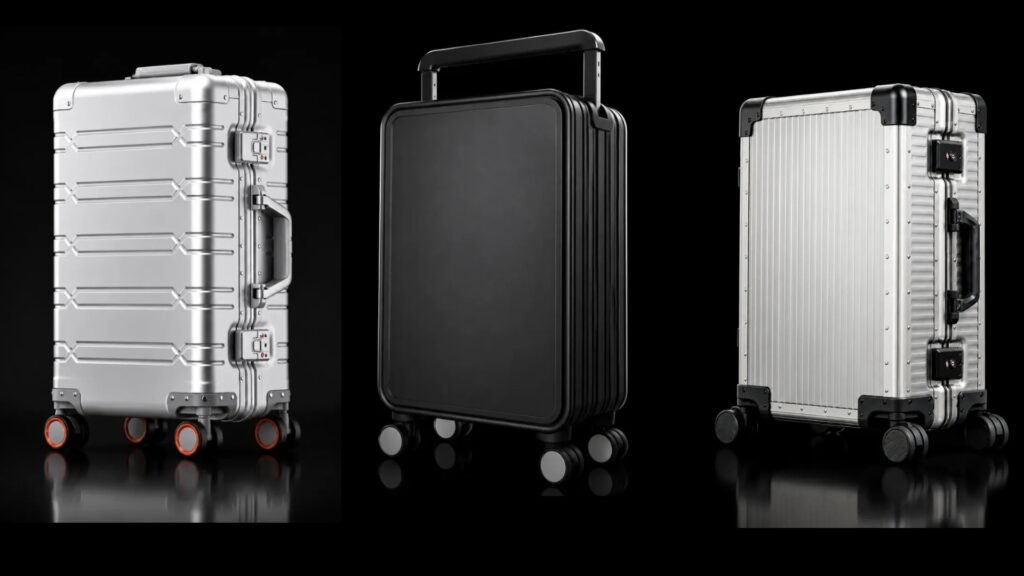
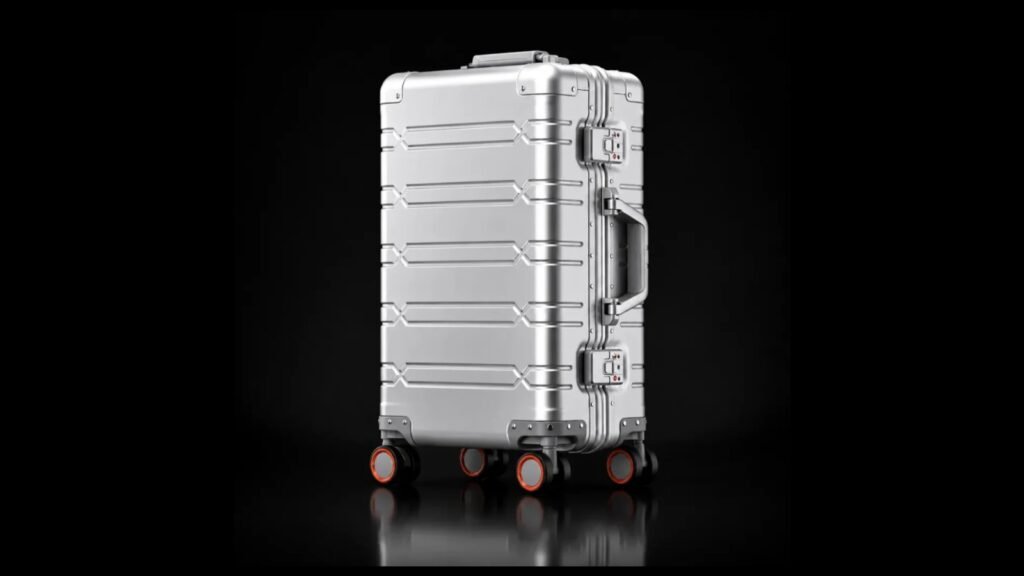
How to Package Metal Luggage for Wholesale Orders
Good luggage packaging needs to protect the case through the journey it will actually make. A shipment going straight to a retailer has different needs from a shipment that a warehouse will open, split and send to individual customers. Start with that route before choosing the carton, protective bag or corner inserts.
For a metal case, we also look at what the packaging touches. A carton can arrive looking acceptable while a loose fitting has rubbed the shell inside. Making the box larger will not solve that contact; the case needs suitable separation and restraint. Making it tighter can create another problem if the wheel units or latches are pressed against the carton.
For brands and importers ordering metal luggage in bulk, the useful decision is how protection, presentation and handling should work together. Here is how we would approach the packaging brief with you.
Where will the cases go after leaving the factory?
Describe the route beyond the first delivery address. “Ship to our warehouse” leaves an important question unanswered: what happens there?
Bulk delivery to a distributor or retail store
If the cases stay together until they reach a distributor, the packing plan needs to suit that batch: the selected sizes, cases per carton, carton identification and handling arrangement. If the distributor opens the cartons to check or display the cases, consider how easily staff can remove the protection without marking the finish.
For store sales, decide whether the customer takes the suitcase away in its original carton, in a branded bag, or without either. That choice changes which packaging must remain with each case and which can be removed at the receiving warehouse.
Warehouse delivery followed by individual online orders
A set that travels together from the factory may become three separate orders later. Each case then needs its own outgoing protection. The original set carton does not provide three individual shipping cartons.
Decide whether the warehouse will keep each suitcase in its factory packing, put it into another shipping box, or fully repack it. Include the outgoing carton, labels and packing materials in that decision. Otherwise, an apparently compact factory shipment can create extra work and material purchases at the next stage.
Direct delivery to the end customer
If the original package will pass through a parcel network, review it for that route. Do not assume that a carton suitable for a consolidated delivery is also suitable for individual parcel handling. If a fulfillment provider will ship the original carton without another outer box, agree on that requirement before developing the packaging.
Corporate gifts and presentation projects
Here, the first opening is part of the product. The protective layers should come off in a sensible order, and the recipient should find the handle, documents and included items without searching through loose packing. A presentation sleeve or printed box can provide the brand experience while a separate transport carton protects it in transit. If one box must do both jobs, assess both its appearance on arrival and its protective performance.
Protect the finish without putting pressure on the fittings
Start with the actual assembled case: front and back panels, frame, corner guards, wheels, carry handles and latches. Look for hard contact, movement and areas where the packaging could concentrate pressure.
A smooth front panel may need a clean separating layer so that it does not rub against the carton or another case. Ribs and corner guards also need separation. Their presence does not make direct rubbing harmless. Keep loose instruction cards, tags and accessory packs from moving against the finished surface.
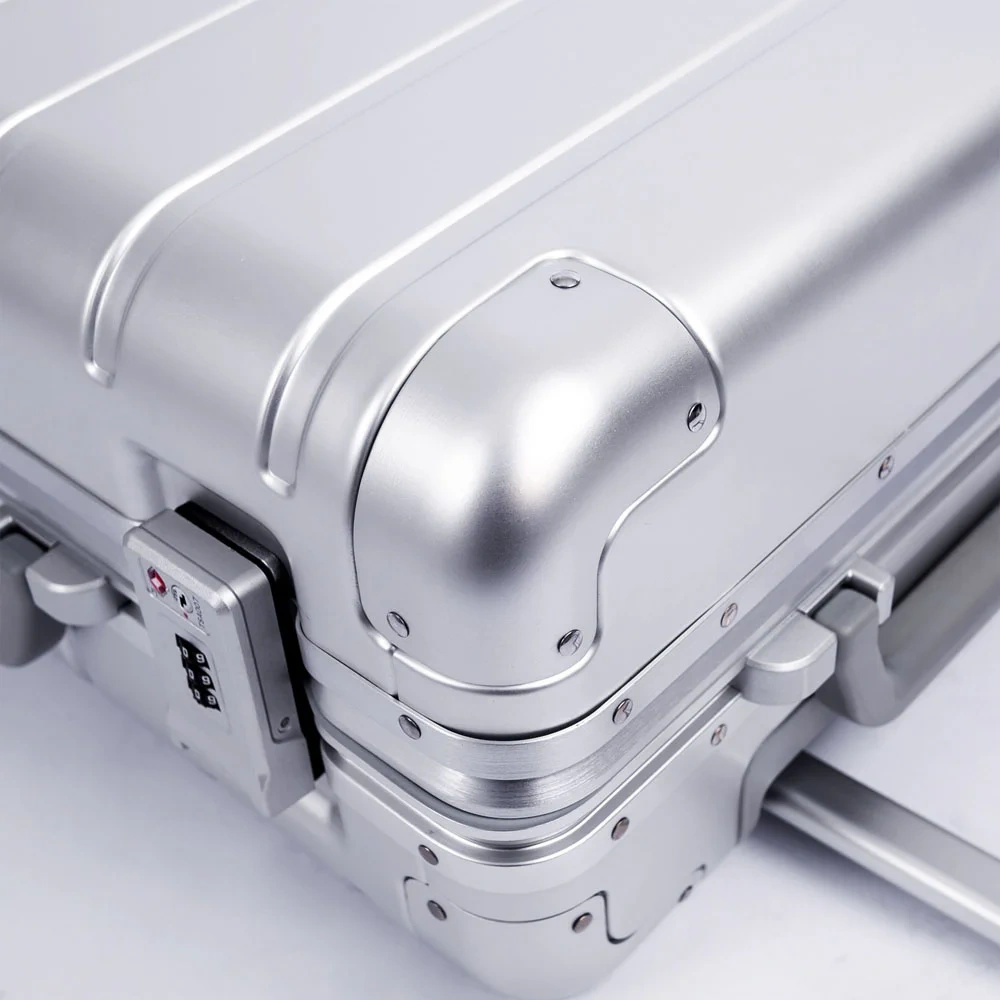
Shaped inserts can help locate the case, but their contact areas need attention. A piece that holds the luggage firmly by pressing on a latch or a wheel fork may create a problem rather than solve one. Review the support locations with the surrounding structure and check that the inserts stay where intended during handling.
Retract the telescopic handle for the proposed packing arrangement and allow for the carry handle in its stored position. Do not use the pull handle as the point that holds the case inside the carton. Check that the packing does not unintentionally release a fitting, force a handle sideways or leave a projecting part taking concentrated pressure.
If a protective film or an adhesive contact is proposed, review it on the actual finish. It needs to come off cleanly after the expected storage conditions. More adhesive or tighter wrapping is not automatically a better answer for a visible metal surface.
Choose each protective layer for a specific job
A dust bag, a separating sheet and a shaped cushion do different work. Start with the problem, then choose the material and shape. Do not expect a thin bag to provide the same restraint or impact cushioning as a designed insert.
| Layer | Useful role | What to review on the sample |
|---|---|---|
| Protective or branded bag | Separates the visible surface and can stay with the customer. | Fit around the case, seams and closures, cleanliness, and whether it leaves marks. |
| Soft separating wrap or sheet | Prevents direct contact between surfaces. | Coverage, movement during packing, surface compatibility and ease of removal. |
| Shaped cushions or corner inserts | Locate the case and provide cushioning at selected areas. | Contact positions, compression, retention and clearance around fittings. |
| Dividers and accessory packs | Keep separate parts and included items in known positions. | Whether anything can move, rub the shell, disappear under a divider or be missed at unpacking. |
| Outer carton | Contains the packed product and supports handling and stacking. | Actual packed fit, board specification, joints, closure and the intended distribution route. |
For light surface protection, a suitable non-abrasive PE foam sheet is one option to discuss. For locating and cushioning a heavier case, the material grade, thickness and shape need to be chosen for that job. Calling both materials “foam” does not establish that they will perform the same way.
Paper-based protection can also be considered where it meets the task. Review the finished package, including its contact with the shell and how the material stays in place. A switch from foam to paper needs a new fit and protection review; it is not just a material name change.
Keep the number of layers purposeful. A bag, wrap, sleeve and presentation box may all have a role, but each also adds removal, packing and disposal work. If two layers do the same job, compare a simpler arrangement on the sample rather than keeping both by default.
Should each suitcase have its own carton?
Once the proposed nesting sequence fits, consider what protects the cases from one another. The smaller case needs separation and restraint around the parts that could contact the receiving case, including its interior. Do not rely on the lining alone to keep hard fittings from rubbing. The receiving case must close normally with the proposed packing in place.
The next question is what the buyer receives. If the complete set is sold together, it needs a clear set identity and unpacking sequence. If the warehouse will sell the cases individually, decide which bags, documents, tags and outgoing cartons belong to each size. Include that work when comparing packing options.
Our luggage size-planning guide covers the size combination and nesting fit. For the packaging decision, use that result and compare the actual packed dimensions, protection and destination handling. A nested set does not by itself establish a freight-saving percentage.
Do not remove wheels just to make the carton smaller
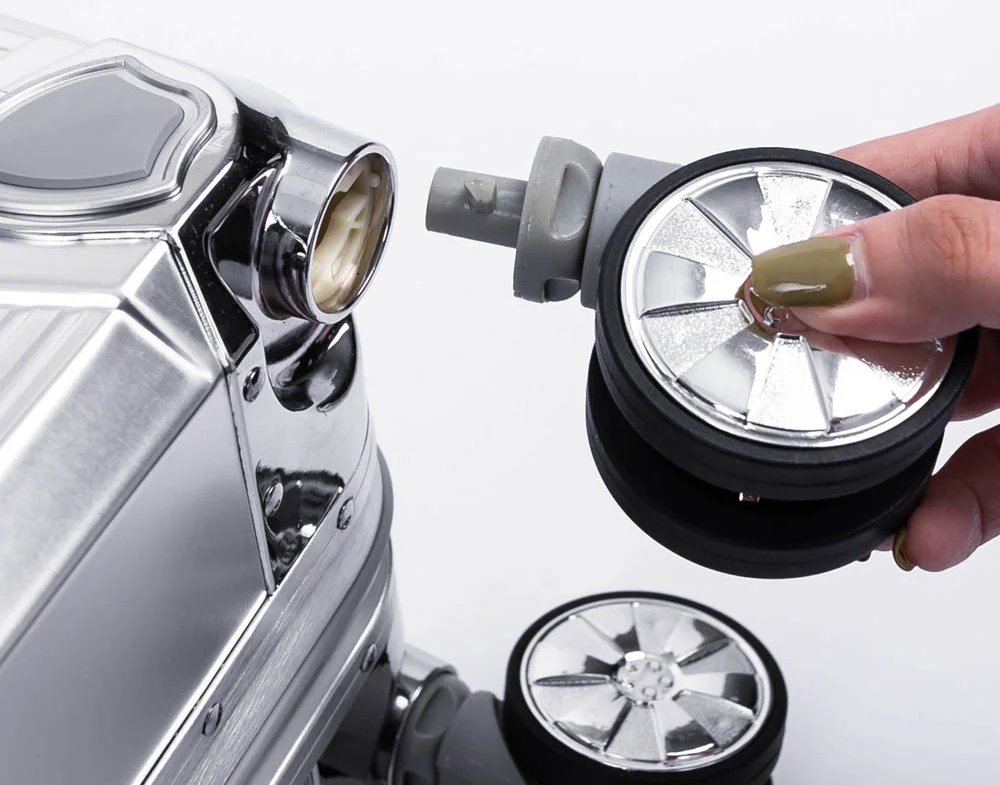
A detachable-wheel design creates a packaging option, but it also creates an unpacking and assembly step. On a model such as YCT-007 with removable wheels, discuss whether the wheels should travel fitted or separately packed.
If the agreed plan removes them, keep every wheel and any required fitting with the correct case, protect the exposed locations and confirm how the recipient reinstalls and checks the wheels. Compare the complete packed arrangement. Do not transfer that plan to a model whose wheel assemblies are intended to stay fitted.
Specify the carton around the packed case
The suitcase dimensions are not the carton dimensions. First allow for the final case configuration and the protection around it. Then establish the carton fit. A different wheel assembly, handle position or insert can change that fit even if the shell stays the same.
A tight carton can compress the protective parts or push against hardware. An oversized carton can leave the case free to move unless the internal arrangement controls it. Review those conditions together instead of choosing a carton solely from the case’s nominal inch size.
Keep two sets of measurements clear: the internal space used to design the packed fit, and the closed outer dimensions used for storage and freight quotations. Also record the gross weight of the complete package and the number of cases it contains. Where a protective part bulges the carton, use the actual closed shape when reviewing the design.
“Five-ply carton” is not a complete strength specification. The board grade, construction, carton size, packed weight and expected handling all matter. State the required performance and have the packaging supplier specify the board and construction to suit it. Adding more layers without addressing poor fit or unsupported areas can leave the original problem in place.
Storage and loading matter too. Corrugated board is affected by moisture, and crushed or damaged edges can weaken a carton. For a long journey or warehouse storage, discuss the actual environment and stacking arrangement. If pallets will be used, include the pallet layout and restraint in the review rather than treating them as separate from the cartons.
A plastic bag is not a complete moisture-control plan. Keep the case and packaging dry before packing, and discuss any additional protection against moisture for the actual route. Adding desiccant does not repair a wet carton or replace suitable storage.
Make the package work for the warehouse and the customer
Confirm whether the retail package will be visible in a store, opened at a receiving warehouse or delivered directly to the buyer. A printed presentation box may need another outer carton so that shipping labels and handling marks do not spoil its appearance.
For a single case, keep the model, color, size and included items consistent across the product label and packaging. For a set, distinguish the set identity from the identity of each case. A warehouse that splits sets needs to know which label belongs to which saleable unit.
Ask the receiving warehouse or fulfillment provider for its current labeling and receiving requirements before approving artwork. Use the required barcode, location and information for that program. A barcode that scans correctly can still identify the wrong size or color.
Plan where the user finds the instruction card, lock information and included accessories. A loose accessory pouch should not be able to rub the shell or be thrown away with a large piece of packing. If packaging includes a branded bag, count it as part of the agreed contents rather than treating it as an incidental protective material.
For gift projects, review the complete opening sequence. Can the recipient lift out the case without pulling on the telescopic handle? Can the protection be removed without tools near the finish? Does the first visible side show the intended branding? These are design choices to settle on the packed sample.
Compare the whole packing arrangement, not just the box price
Use the same finished case and delivery route when comparing two packaging proposals. Otherwise, a lower price may include fewer protective parts, different contents or more work for the destination warehouse.
Keep the comparison to four practical entries: materials and packing work at the factory; actual carton count, outer dimensions and gross weight; handling and storage at the destination; and any packaging or labor needed before the final customer shipment.
If a nested set needs to be opened and repacked into individual cartons, include those cartons and that work. If individual factory packing can remain intact through fulfillment, compare that route as well. Neither arrangement is always cheaper.
Also check how packing variations affect the order. Different sizes may need different inserts or cartons. Custom printing may have its own production minimums, artwork work and delivery schedule. A luggage order quantity does not automatically settle those packaging conditions.
Request freight quotations using the final packing measurements and the same delivery scope. Do not use the suitcase’s storage capacity in liters as the shipment volume. Our metal luggage cost guide explains how packing and delivery charges fit into the wider quotation.
Approve a packed sample for the intended journey
A picture of a closed carton shows very little of the protection inside. Review the packed sample from the case outward: the separating layer, insert positions, accessory locations, carton fit and closure. Then unpack it and examine the finish and fittings at the contact points.
Record the packing sequence so that the arrangement can be reproduced. A hand-shaped cushion that happens to fit one sample is not enough if the production packer has no defined shape or position to follow. Keep the material references, dimensions, quantities and orientation with the packing instructions.
For transport testing, select a procedure that fits the distribution route and the question being checked. A basic screening test and a simulation of an individual parcel journey have different scopes. Tell the packaging supplier or test laboratory whether the shipment will travel as individual parcels, in a mixed load or as a palletized load, and where repacking occurs.
Test the product and packaging together in the proposed configuration, with the agreed contents. An empty carton test does not establish how it protects the luggage. Likewise, the suitcase’s own wheel or handle durability result does not establish the performance of the transport package.
After the agreed checks, inspect both the package and the case: surface marks, dents, shifted protection, carton damage and operation of the fittings. If a cushion moves, identify why and revise its fit or restraint. If a latch takes pressure, change the contact arrangement rather than only increasing the cushion thickness.
Keep the approved packing version with the product specification. Changes to the case, bag, inserts, carton or packed contents need a review of the affected fit and protection. Use the pre-shipment inspection to check whether the batch follows that approved arrangement.
Develop the packaging with the luggage
At SuitcaseMaker, packaging can be discussed alongside the finish, branding, hardware and interior of the selected model. Bring it into the project before those choices are frozen. A wheel change can affect the carton; a set decision can affect the packing sequence; a branded bag can affect both presentation and the packed fit.
You do not need a completed carton drawing to start. Tell us the model and sizes, how they will be sold, where the shipment goes first and what happens before it reaches the customer. Add your warehouse requirements and any packaging reference you want to use.
From there, we can work through the proposed layers, contact areas, presentation and packing sequence, then review them on a physical sample. The result should be one defined package that the factory can pack and the receiving team can handle as intended. Explore our custom luggage options to discuss the case and its packaging as one project.
Tell us about your luggage project
Share your preferred model, quantity and customization requirements.