Luggage HS Codes: A Guide for Importers
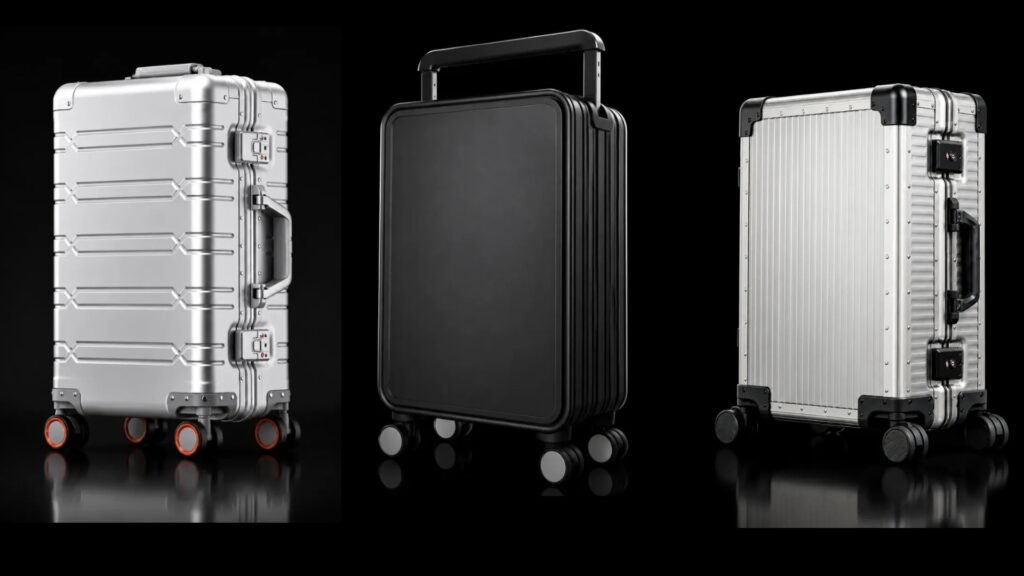
A supplier may give you an HS code when quoting a suitcase. Before sending that number to your customs broker, check which construction it describes: an aluminum shell, a plastic shell with an aluminum frame, or a case that combines a metal body with a leather pocket or another exterior covering.
Ordinary suitcases are generally considered within the relevant container provisions of heading 4202. Product type, outer surface and the importing country’s subdivisions then guide the next steps. A silver appearance, a metal closing frame or a sales name such as “aluminum luggage” cannot replace a description of the actual product.
For an importer, useful preparation starts with the model, intended use, shell material, outer surface and packing details. This guide uses U.S. import classification as its example and explains how a factory and buyer can put those details together.
What HS Code Does a Suitcase Use?
The international HS classification extends to six digits. The complete number used for an import entry must then be checked against the destination country’s tariff schedule.
For trunks, suitcases and the other containers named in the same group, the following six-digit branches are common starting points:
| Six-digit branch | Classification direction | What to establish about the product |
|---|---|---|
| 4202.11 | Outer surface of leather or composition leather | Whether leather forms the exterior covering or is limited to a pocket, handle or trim |
| 4202.12 | Outer surface of plastics or textile materials | The actual exterior material; plastics and textiles have further subdivisions |
| 4202.19 | Other containers within this group | Aluminum-surface suitcases have been classified here; this is not a metal-only provision |
First establish that the product belongs in this group. A soft-sided suitcase, a travel bag, a backpack and a specialized container cannot all be assigned the same branch simply because they carry belongings. A textile-surface suitcase and a textile travel bag, for example, may follow different classification paths.
A 20-, 24- or 28-inch designation mainly describes size. Size does not replace the product-type and material analysis. Wheels, zippers and latches also cannot independently determine the outer-surface branch.
After identifying the six-digit provision, check the destination schedule. The U.S. HTS uses eight-digit legal tariff provisions and ten-digit statistical reporting numbers. A supplier’s six-digit HS code can provide a starting point; a complete export code needs to be compared with the importing country’s structure.
Aluminum Shells, Aluminum Frames and Mixed Materials
Describe the shell, closing frame, exterior covering and lining separately. This makes many apparently complicated material questions easier to explain.
Describe the aluminum shell and the other components separately
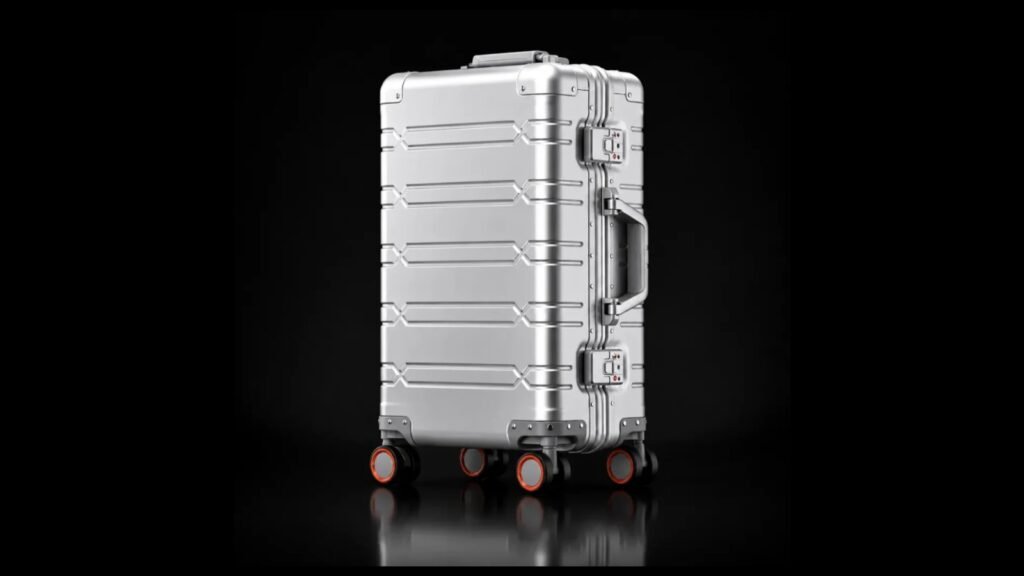
Our TS-006 aluminum suitcase has an aluminum shell and is offered in 20-, 24- and 28-inch sizes. Its product information should identify the actual shell alloy, surface treatment and construction, with separate descriptions for the lining, wheels, handles and locks.
An aluminum shell does not mean every component in the finished suitcase is aluminum. Wheels have tire materials, the interior uses fabrics, and handles and locks have their own construction. Describing the complete product as “100% aluminum” can conflict with the actual case.

Alloy descriptions matter too. Our YCT-006 business carry-on has a 5000-series aluminum-magnesium alloy shell. Its material description should retain that information. The word “magnesium” in an alloy description should not turn it into a pure-magnesium case, and the material of a frame, trolley or corner guard should not be substituted for the shell material.
List the surface treatment separately. Matte appearance, brushing and anodizing describe an appearance or treatment, while the material field still needs the actual shell material. Where a coating, film or external covering is added, identify its material and location as well.
Plastic shells with aluminum frames
When a case uses PC, ABS or another plastic shell with an aluminum closing frame, describe both parts. The structural role of the frame and the outer surface formed by the shell need separate consideration.
In one U.S. Customs ruling, a finished suitcase contained plastic shells, an aluminum frame, trolley components, wheels and textile components. The specific product was classified as a rigid suitcase with an outer surface of plastics. Adding an aluminum frame did not make its shell an aluminum outer surface.
If a purchasing catalogue says only “aluminum frame luggage,” the broker still needs to know what the front and back shells are made from and whether another material covers them. The sales description does not answer those questions.
A metallic finish, metal corner guards or a metal logo plate likewise cannot independently establish a metal outer surface for the complete case.
Keep the lining separate from the outer surface
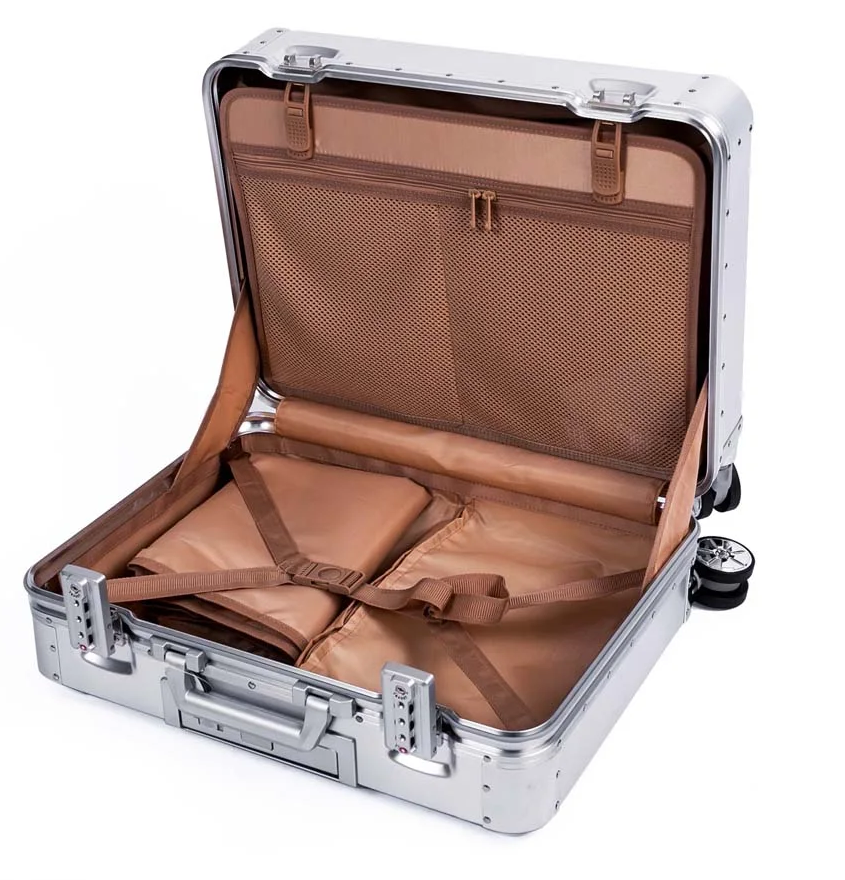
Nylon, polyester or mesh inside an aluminum-shell suitcase does not, by itself, make it a textile-surface suitcase. Identify internal organizing materials separately from exterior materials.
For a suitcase covered externally with textile fabric, describe that exterior even if a rigid support sits underneath. A photograph of the internal support alone cannot explain the finished outer surface.
Photographs should show the front, back, sides and open case. For covered products, add close-ups of covering edges or seams so the exterior and supporting layers can be understood.
With mixed materials, establish their location, coverage and role
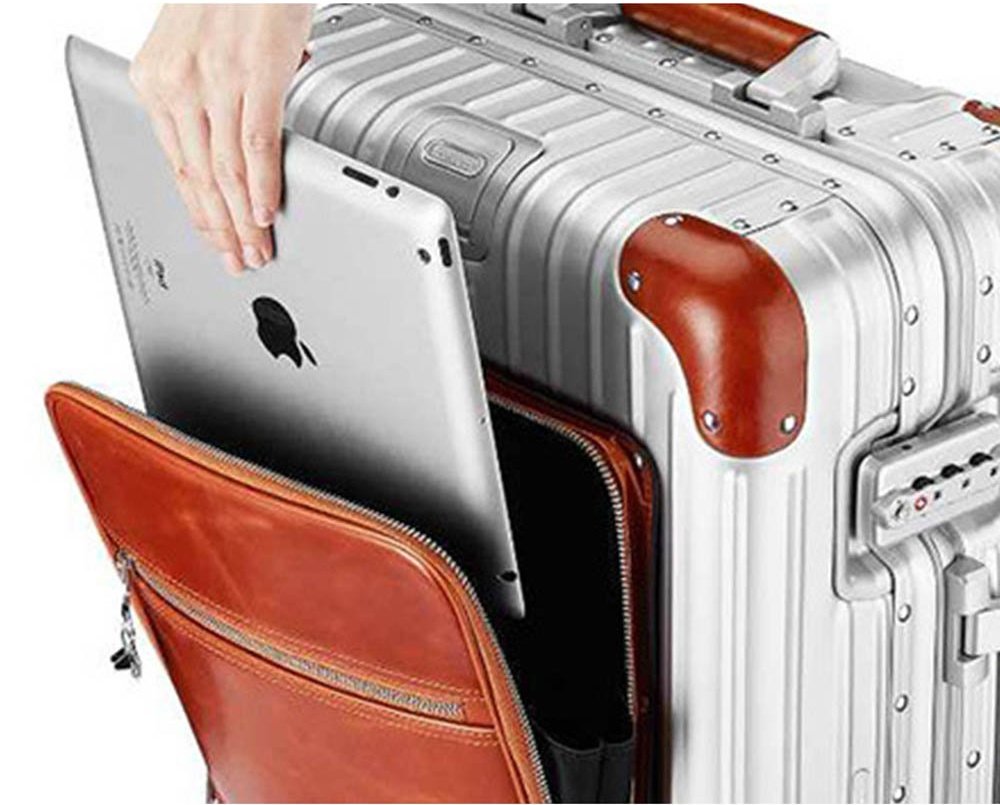
Mixed-material construction is common. A list reading “aluminum, leather, plastic and textile” leaves important questions unanswered. Explain where those materials sit and what they do.
Our TS-003 front-pocket aluminum carry-on combines an aluminum main body with a separate zippered leather front pocket. Its description needs both features. “Aluminum suitcase” alone omits the external pocket; “leather luggage” alone fails to describe the metal body.
If a buyer enlarges that pocket to cover the entire front or adds covering to other exterior areas, provide updated front, back and side photographs with the material description. The original model description may no longer fully represent the finished design.
Work through the construction in this order:
- Identify the finished product and its intended use to establish the product categories being compared.
- Identify each material’s location, coverage and role as a shell, external covering, functional pocket or trim.
- Check the outer-surface provisions within the relevant category, then apply any further mixed-material analysis required by the applicable rules.
Do not start with a universal rule that the most expensive material determines classification or that a material must exceed half the total weight. The nature, distribution and role of the materials need to be considered within the relevant provisions and the actual construction.
Leather descriptions should also be specific. Genuine leather, composition leather, a leather-like appearance and plastic-coated fabric are not interchangeable material descriptions. “Leather look” in a purchasing brief needs an actual material specification behind it.
For layered constructions, explain the layers: is there a supporting shell beneath a bonded exterior covering, or is the apparent exterior only protective packaging removed during shipment or unpacking? Anodizing, spray coating, applied film and leather covering describe different processes or constructions. Writing only “finish” leaves out the information needed to understand the surface.
Can You Use the Supplier’s HS Code?
First establish whether the supplier has provided a six-digit HS code or the complete number used for export declaration. Compare it with the destination country’s current tariff schedule.
Send the model, material description and product photographs along with the proposed number. The broker needs to determine whether the finished product fits that classification, not simply whether the number exists.
When reviewing a similar ruling, compare the conditions: the outer surface, product type, whether the shipment contains a complete case or components, and any additional functions. Similar appearance helps locate references, but the construction still needs checking.
If you plan to sell a 20-, 24- and 28-inch collection in the United States, list the final specifications for each size. Sizes sharing the same construction and outer surface can be reviewed together. Identify differences separately if one version adds a front pocket, uses a different exterior covering or has a different intended use.
Once classification is established, have the applicable import charges checked. The base tariff, origin-related measures, any additional provisions and the date of import need separate attention. Ocean freight, destination charges, brokerage and final delivery should also match the scope included in the supplier’s quote. Our guide to custom metal luggage costs helps organize the quotation items used in that comparison.
Where a material classification question remains after the product information has been reviewed, a classification ruling can be requested from the destination customs authority before shipment. Addressing that question during final design approval leaves time to prepare the supporting descriptions and documents.
What Product Details Does Your Broker Need?
A useful information pack helps the broker understand the finished product and lets purchasing, factory and logistics teams identify the same shipment. Classification information and shipment information are connected, but serve different purposes.
| Information | What to include | Purpose |
|---|---|---|
| Model and use | Model, revision, product name and main intended use | Identify the product being discussed |
| Shell and outer surface | Alloy or plastic material, textiles, exterior coverings and coatings | Support classification |
| Mixed-material layout | Location, coverage, function and structural relationship of materials | Explain the exterior and complex construction |
| Photographs and dimensions | Multiple views, relevant details and external dimensions | Check the written description against the product |
| Quantity and packing | Quantity by model and size, packing arrangement and carton count | Match the order and packing list |
| Weight and transaction details | Net and gross weights, price, currency and agreed trade terms | Support shipping, valuation and document preparation |
Carton count, packing dimensions and gross weight affect shipment planning. This does not mean every logistics field determines the six-digit HS provision. Identifying the purpose of each field makes the pack easier to review.
When sending one TS-003 sample for evaluation, for example, the goods description should still explain that it is a suitcase with an aluminum main body and an external leather front pocket. “Sample” describes the reason for that shipment, but cannot replace the product description. Value and other declaration information should reflect the actual transaction and applicable requirements.
If the buyer changes the front-pocket material after sample approval, update the production information. Old sample photographs and material descriptions should not be used to describe a changed bulk-production version.
How Do You Check the Invoice and Packing List?
The documents should let each party establish what the goods are, how many there are and how they are packed.
A commercial invoice generally focuses on the goods description, transaction quantities and commercial details. A packing list focuses on package contents, quantities and weights. The specification adds material, construction and revision details. The fields do not need to be identical across every document, but the documents should be reconcilable.
Where a shipment includes several sizes, identify the quantity of each. If the order is sold in sets, explain which sizes each set contains and how the products are actually packed. Sets on an invoice, individual cases on a packing list and cartons in logistics records need a clear relationship.
Keep net and gross weights separate. The individual case weight on a sample sheet cannot simply be used as the packed gross weight for the shipment. Final totals need to reflect the sizes, fittings and packing used for the actual goods.
Check model and revision references carefully. If purchasing approved a TS-003 with a leather front pocket, its photographs and material description should match that configuration. If the shipment also includes ordinary metal-shell models, distinguish them in the item details rather than using one generic image and the description “metal luggage” for everything.
The number and written description should agree too. If the material sheet shows a plastic shell with an aluminum frame while the invoice describes an aluminum shell, correct the product description and review the code. Do not change a factual description merely to retain a number from an earlier shipment.
Pre-shipment inspection can check the actual goods against the approved sample and specification. Classification-document review checks the product description and basis for declaration. Both activities should work from the same final product revision.
What Should You Recheck After a Design Change?
Custom programs often change materials, pockets, interiors and hardware together. Record each change so the teams can distinguish appearance changes from changes to construction or outer surface.
| Change | Information to update or review |
|---|---|
| Different shell material | New material specification, construction, outer-surface description and photographs |
| Added or enlarged leather, textile or other exterior covering | Material, coverage, attachment method and views of each side |
| Different coating or film construction | Substrate, outer-layer material, process and coverage |
| Different lining, dividers or straps | Interior specification and final weight; confirm whether the external construction stays the same |
| Different wheels, handles or locks | Component and complete-case specifications, weight, dimensions and packing changes |
| New color or logo | Appearance revision; establish whether the exterior material or treatment also changes |
A new logo, lining color or ordinary component does not automatically mean a new HS code. Check whether the outer surface, product category or relevant subdivision criteria have changed. If the program adds electronic modules, develops a specialized-use container or combines different products into a retail set, provide information about the added functions and combination as well.
For a buyer developing a front-pocket business case from an ordinary aluminum-shell platform, we first establish what the pocket must carry, its opening, material and coverage. We then review how it fits the shell, closing frame and interior space. Sampling checks use and assembly. After approval, the final materials, construction, photographs and packing information should all describe the same revision.
For a business carry-on such as YCT-006, a change to interior pockets or document organization should be described as an internal change. If the program also changes the shell material or adds an exterior covering, identify those changes separately. A clear revision summary lets the broker review the actual finished product without trying to reconstruct it from multiple old drawings.
During custom luggage development, establish the target market, chosen model, materials and construction requirements together. We explain the actual product and the agreed design changes; the importer and customs broker use that information to check the complete declaration details. Once the approved sample, order specification and shipment information identify the same product, final documentation and transport arrangements can move forward.
Tell us about your luggage project
Share your preferred model, quantity and customization requirements.