Zipper vs Zipperless Luggage: What Brands Should Compare
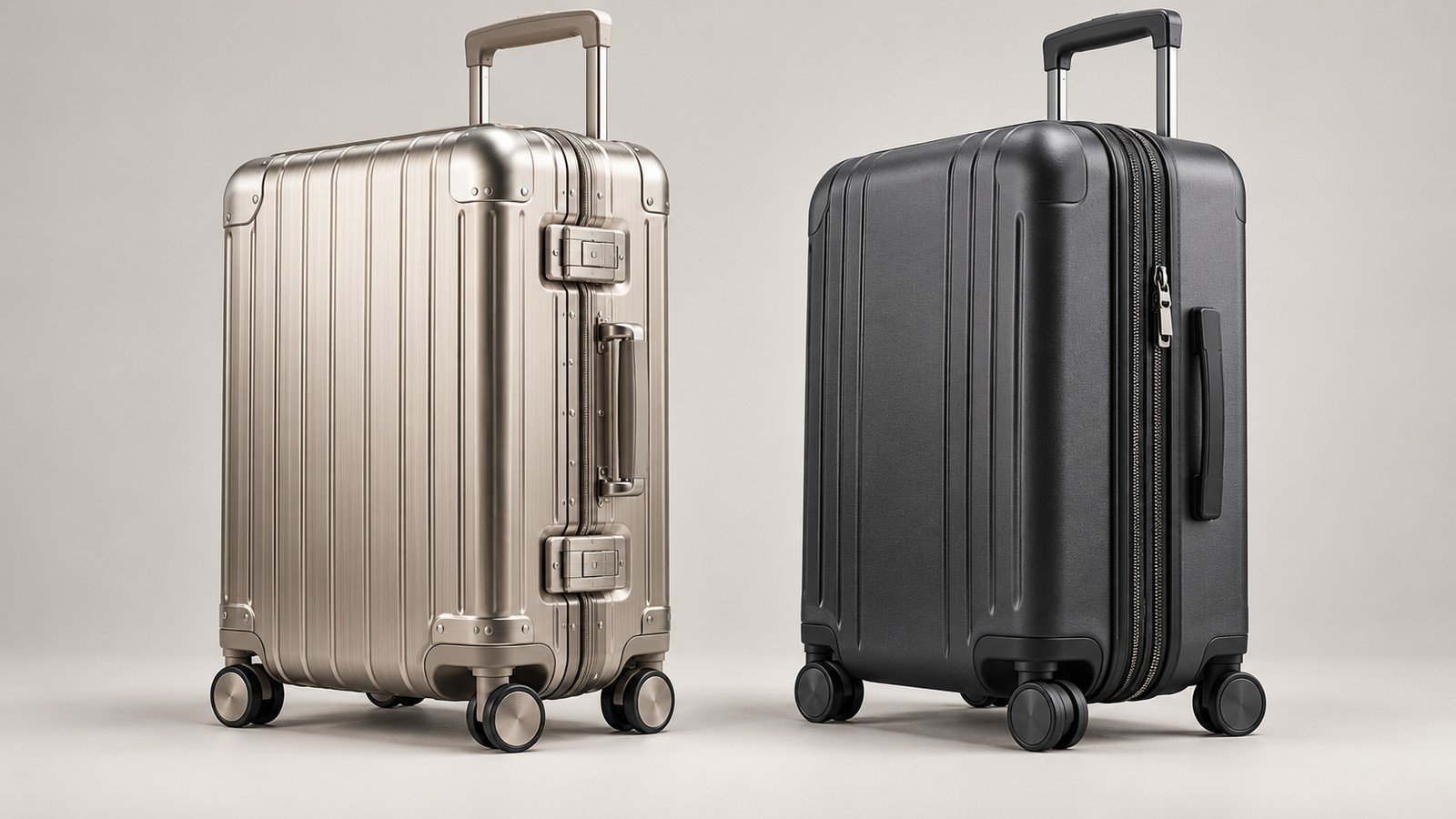
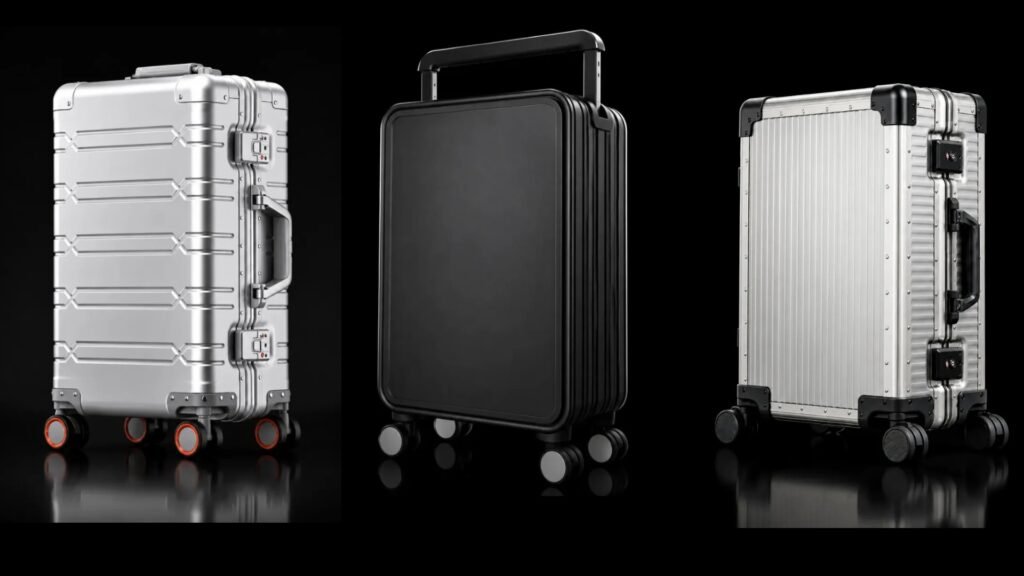
When developing a luggage collection, first decide how the main compartment should open, how the packed case should close, and whether expansion is required. Then compare zipper and frame-latch closures. For a metal suitcase project, the closure needs to be considered alongside the frame, hinges, interior and hardware: similar-looking cases can have different shell materials, mounting arrangements and development requirements.
As a manufacturer, we recommend defining the required functions before comparing complete samples. An existing frame-latch model can be a starting point when you want its frame appearance and latch operation. If expansion is essential, specify the expansion structure, extended dimensions and intended use separately. Weight, cost and durability should all refer to an actual configuration, rather than the terms “zipperless” or “zippered” alone.
| Decision | Frame-latch closure | Zipper closure |
|---|---|---|
| Main compartment | The two frame halves meet and latches engage at designated positions. Review the frame, hinges and engagement together. | Sliders join or separate the opening along the zipper elements. Review the elements, sliders, tape and installation. |
| Access and expansion | Confirm the fixed compartment’s capacity and opening. Design separate openings, such as a front pocket, individually. | Expansion needs its own structure. A zippered main opening does not automatically make a case expandable. |
| Complete-case weight and cost | Include the selected frame, latches, hinges and attachments. | Include the zipper specification, installation, interior and any expansion features. |
| Sample review | Check frame engagement, corners, hinge movement, latch operation and closing under the agreed load. | Check the full slider path, corners, lining interference, attachment edges and closing under the agreed load. |
| Claims and acceptance | Verify security, water-resistance and endurance requirements on the selected complete case under agreed conditions. | Separate component specifications from complete-case results and apply the same project requirements. |
1. What Do Zipperless, Aluminum Frame and All-Aluminum Shell Mean?
“Zipperless” describes how the main compartment closes. A case with a frame and latches may have metal shells or shells made from another material. An aluminum frame and an all-aluminum shell therefore need separate descriptions in a purchase specification: a metal frame does not establish that both shell halves are aluminum.
Products combining polycarbonate shells with frame latches already exist. For example, RIMOWA’s original material description for its Hybrid line distinguishes the polycarbonate exterior from the aluminum parts and identifies the latch configuration. This illustrates the difference between materials and closure construction; it does not establish another case’s materials or performance.
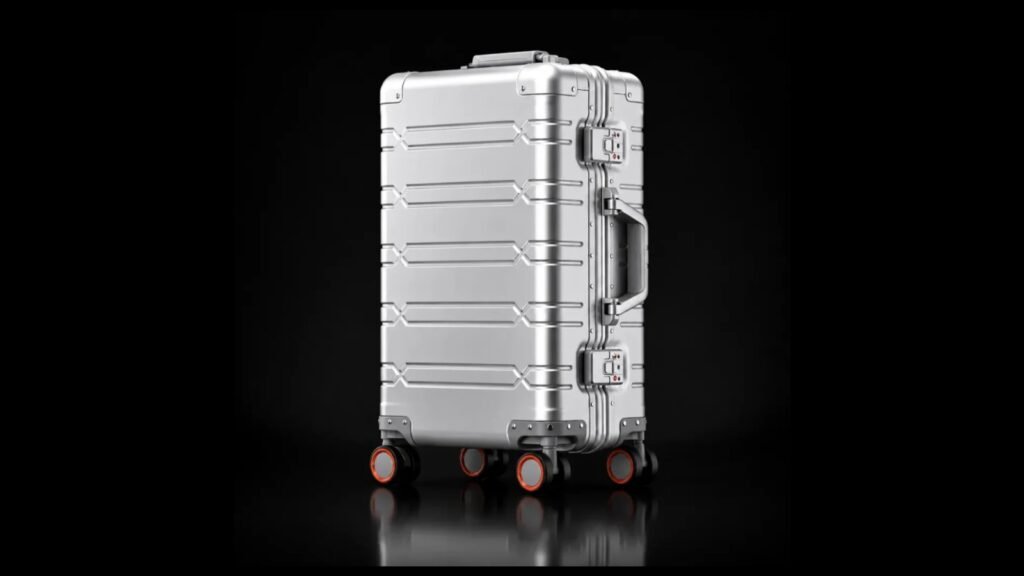
In our aluminum luggage range, TS-010 provides an example of aluminum shells with a rounded frame. When contacting us, specify the shell material, the frame appearance you want to retain and the main-compartment closure separately. This avoids using a reference image of a framed PC case as an unqualified specification for an all-aluminum case.
2. How Do Frames, Hinges and Latches Work Together?
Frame latches: review how the two halves meet
A framed case needs its two frame halves to align when closed. Hinges connect the opening side, while latches engage on the opposite side or at other designated positions. Latch operation depends on the frame profile, corners, hinges and shell-to-frame attachments. A latch that works smoothly on a bench does not replace an operation check after installation on a complete case.
Our TS-010 rounded-frame aluminum carry-on uses a rounded frame. Its product process description includes checking the formed frame with a gauge before shell assembly. The relevant issue is the fit between the actual formed profile and subsequent closure. If your design changes a corner or frame profile, we need to assess the shell edge and frame together, rather than simply placing a different latch on a reference drawing.
Zippers: specify the fastening and its installation together
A zipper slider joins or separates the elements along the opening. Selection involves more than the element type and slider: consider how the tape is attached, how the slider travels around corners and whether nearby lining can be caught. Zippers for the main compartment, front pocket and lining pockets serve different functions. A brand name alone does not specify all of them.
If you have a reference case with a zippered closure, send photographs of the open main compartment, corners and inside attachment area. For metal-case development, we first review how those areas relate to the proposed shell, then identify what can remain and what needs to change. The comparison should address actual interfaces and opening movements.
3. How Should You Specify Main Access, a Front Pocket and Expansion?
For quick access, identify which compartment needs to open
“Easy laptop access” may mean an independent front pocket or a different main-compartment opening. Those requirements affect different areas of the case. Changing a main latch’s color does not change the access route; adding the front opening seen in a reference also requires a review of its opening, attachment and internal space.
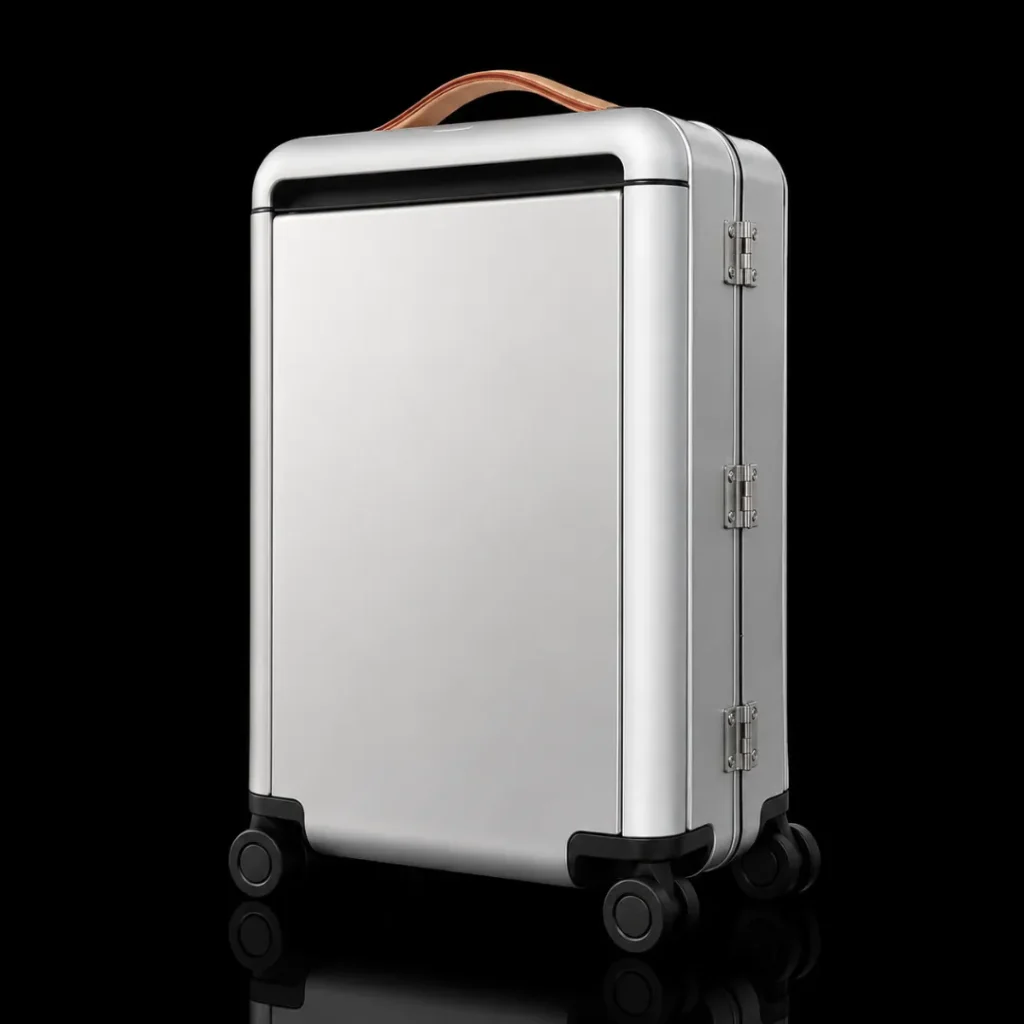
Our TS-003 front-pocket aluminum carry-on illustrates two separately handled openings: TSA combination latches close the main case, while the leather front pocket uses a zipper. Documents or equipment in that pocket can be accessed without opening the main case. A zipperless main compartment can therefore coexist with zippers on a front pocket or interior pockets.
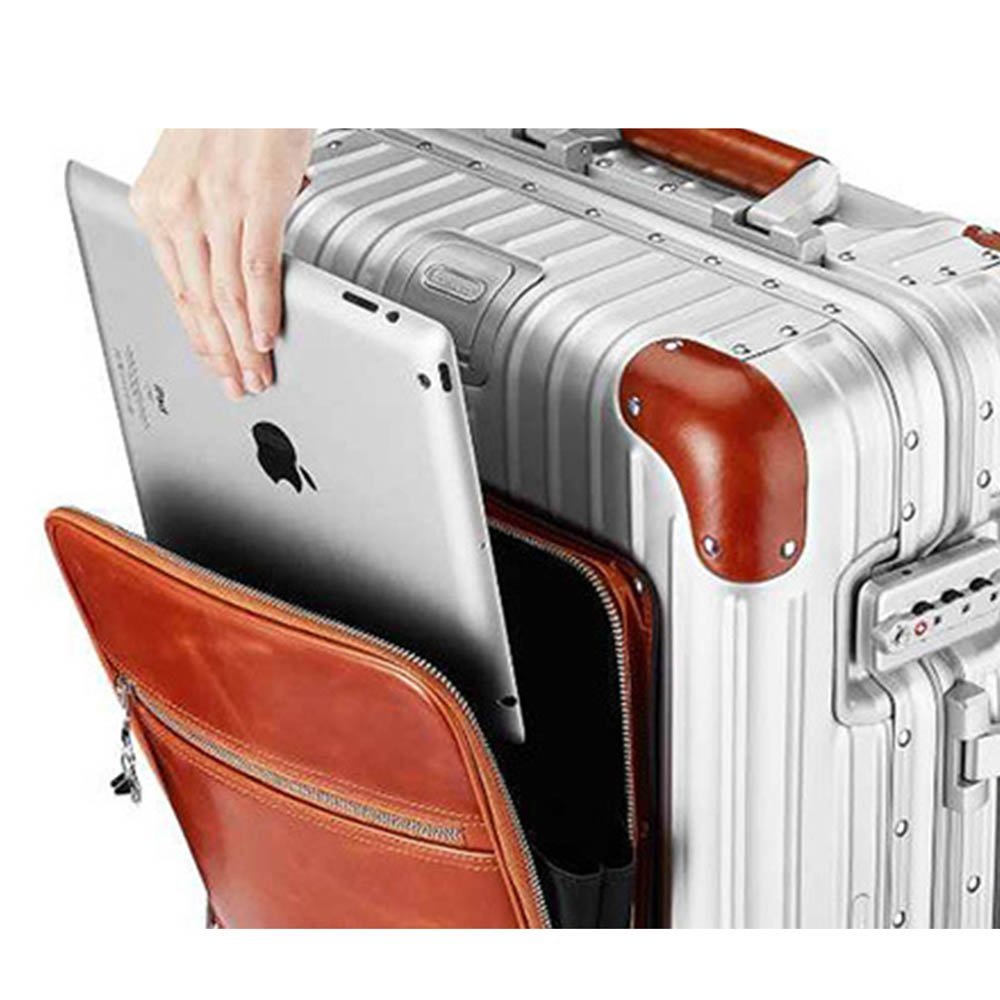
If your brand wants another pocket material, a changed opening or additional device retention, we discuss the pocket-to-shell attachment, opening size and required space together. The sample then confirms whether the intended device can be inserted, removed and secured as required. Actual device dimensions and thickness are more useful for checking access than a screen-size label alone.
Specify expansion as a separate function
A main closure zipper and an expansion zipper do different jobs. Two sliders describe how a zipper can be operated; they do not establish that the case can increase in depth. Double-layer zipper elements describe the element construction, not an expansion feature.
If expansion is required, provide target dimensions in both compressed and expanded states, the interior arrangement and intended use. When starting from an existing frame-latch model, this change needs a case-design review: the capacity and price of a fixed-depth model cannot simply be carried over. Without an expansion requirement, compare the target capacity and closing operation instead of adding development work for an unused function.

4. How Can You Compare Weight and Quotes on Similar Configurations?
Establish external dimensions, shell material, wheels, trolley and interior requirements before comparing closures. A complete case with a front pocket and device compartment is not directly comparable with a simply lined sample just because both share an inch-size label.
The TS-010 website lists its standard configuration as 20 inches and 4.5 kg. That is a complete-case specification for that configuration, not a fixed weight for every rounded-frame case or evidence of how much heavier frame latches are than zippers. If hardware, lining or other components change, compare the weight of the selected version. Our aluminum vs polycarbonate luggage comparison addresses the material side of this decision.
Break down the quote in the same way. A frame-latch configuration should include its frame, hinges, latches and attachments. A zippered configuration should identify the main zipper, sliders, installation and any expansion features. If new shells or mounting areas are involved, distinguish design, processing, tooling and sample work from the components themselves.
Keeping an aluminum case’s shape while changing the latch finish is a different request from replacing its main closure structure. The first begins with the selected component’s appearance and supply conditions; the second begins with the affected construction. Quotes tied to the same requirements show what a difference in price includes and which costs belong to development.
5. Which Security, Durability and Water-Resistance Claims Need Evidence?
Relate security requirements to the specific construction
A zipperless main opening removes the perimeter zipper, but the complete product still has shells, a frame, hinges and latches. Before making a security claim, define what is being evaluated, the area being assessed and how the result will be judged. Closure type alone is not a complete-case security rating.
Zippers also differ in construction. YKK’s public RCW product information describes a double-element puncture-resistant design. This is a component manufacturer’s description, rather than a specification or complete-case test result for one of our models. It shows why all zippers should not be assigned the same performance.
TSA compatibility concerns inspection access. What a frame latch or zipper lock secures, and how it operates, still depends on the selected lock. See our guide to TSA locks for metal luggage for the mechanism and selection details.
Include installed fit and operation in durability review
For a frame-latch sample, examine frame engagement, hinge movement, latch operation and changes after assembly. For a zippered sample, examine the elements, sliders, tape and attachment area, especially the full travel path and corners. Bench operation does not replace complete-sample checks under the agreed loading conditions.
When closing resistance occurs, record whether it happens empty or packed, where it occurs and the operation that produces it. YKK’s handling guidance warns that forcibly closing an overfilled bag can damage elements or tape, and that forcing a slider when fabric is caught can make the problem worse. Review loading and lining positions together rather than attributing every resistance issue to zipper specification.
A frame or zipper surface does not establish waterproofing
If the intended use includes rain exposure, describe the type of water contact and required outcome before choosing an appropriate complete-case check. A seal, a component’s water-repellent description or a close-looking joint does not establish a complete-case protection claim.
YKK’s VISLON AquaGuard guidance, for example, distinguishes water repellency from watertight performance. Even this specific component has stated limits; a complete assembly needs assessment against its actual construction. A frame-latch case likewise needs its selected engagement and sealing design checked. A metal frame alone is not a waterproofing promise.
6. How Does the Development Scope Change with the Closure Request?
For custom metal luggage, we start with the selected model and identify what stays and what changes. Existing tooling can be assessed for reuse, but that does not make every alteration a simple hardware swap. Equally, a different closure should not be assumed to require every tool to be remade before the design is reviewed.
| Requested change | First review | Confirmation needed |
|---|---|---|
| Retain construction; change color or finish | Existing component material, available finishes, appearance reference and coordination with the frame and other hardware. | Selected appearance and sample reference, supply conditions and related processing. |
| Use another existing latch or zipper component | Latch fixing and engagement positions, or zipper specification, sliders, tape and installation edge; also check internal space. | Which interfaces stay, which areas change and how the installed assembly operates. |
| Change the main closure structure | Shell edges, frame profile, opening connection, mounting positions and interior arrangement. | Overall construction and development work before defining processing, tooling and samples. |
For TS-010, retaining the rounded frame and changing the latch appearance allows the discussion to start with the existing installation. Changing the frame cross-section, corners or hinge arrangement also requires a review of shell edges and closing positions. Define what is retained, what changes and what the sample must demonstrate, rather than adding only “use a new lock” to a drawing.
Mark reference images with the features that must stay and the areas you want to change. We can then review the drawings and construction scope before discussing development and supply terms. This makes proposals easier to compare and provides specific changes to check during sample review.
7. What Should Closure Samples Demonstrate Before Production?
Compare candidates with similar dimensions, interior configurations and agreed loading conditions. Start with the complete case empty, then install the dividers, lining and retaining straps, and finally check operation with agreed contents or loads. This helps distinguish basic engagement issues from interior interference or loading effects.
Frame latches: follow the perimeter, not just one latch
Bring the halves together along their normal opening path. Observe the corners, hinge side and latch side, then operate each latch. Record where extra sideways pressure is needed, where contact occurs first and where an abnormal gap remains. If an empty case works normally but becomes difficult to close with its interior installed, check for lining, dividers or contents in the joint and compare with the empty condition.
If the issue consistently occurs at one corner, include that corner and its relationship with the nearby frame, hinges or latch engagement in the review. “The latch will not close” is not enough evidence to decide that the lock must be replaced. After adjustment, repeat the original loading and operation conditions to see whether the problem is resolved.
Zippers: check the entire path, corners and lining
Move the slider through the full closure path in the agreed condition. Observe whether resistance concentrates at a corner or seam, whether lining is caught and how the attachment edge sits when closed. If a jam occurs, identify the location and interference and follow the component’s handling instructions; extra pulling force is not a substitute for review.
Check expandable designs in both compressed and expanded states. On cases with a front pocket, inspect that pocket and the main compartment separately, then check whether they affect one another under the agreed load. A smooth pocket-zipper demonstration does not replace a main-case closure check.
Separate operation observations from endurance results
A successful opening and closing demonstrates operation at that time. If the project requires repeated operation, loading or drop tests, agree on the applicable samples, methods, conditions and acceptance requirements, then recheck the closure afterward. An operation demonstration is not evidence of a service-life or durability rating.
Once the configuration is selected, complete metal luggage sample approval with the closure, shells, interior and other components reviewed as one complete version.
8. What Closure and Spare-Part Details Should Be Handed Over?
For wholesale metal luggage and brand production orders, tie the closure requirements to the selected model and size: main closure construction, component and finish versions, and any related changes to the pocket, interior or packaging. Raise spare-part needs at the same time; confirm specific parts, quantities and compatibility for the project.
We use meetings to hand the final customization requirements to production and quality inspection, distributing them to the relevant stages. For closures, the handover should identify unchanged areas, changed components or finishes, and the operation and inspection requirements confirmed on the sample. If the frame stays and only the latch color changes, preserve that scope. If the interior also changes, identify the areas that could affect closing.
We sample each batch according to the customer’s project requirements. Remote inspection can be arranged when you cannot visit. For closure review, first identify the sampled model and configuration, then show the engagement areas and complete operation. See our metal luggage pre-shipment inspection guide for the wider sampling, recording and shipment process.
Send the model and opening requirements together
Tell us your target market, reference model and dimensions, expected quantity, main-compartment and front-pocket opening requirements, expansion needs, and complete-case weight and budget targets. Mark any photographs or drawings with the features to retain and change. We can use these to discuss candidate construction, development scope and sample content before confirming the project configuration and quote.
Tell us about your luggage project
Share your preferred model, quantity and customization requirements.