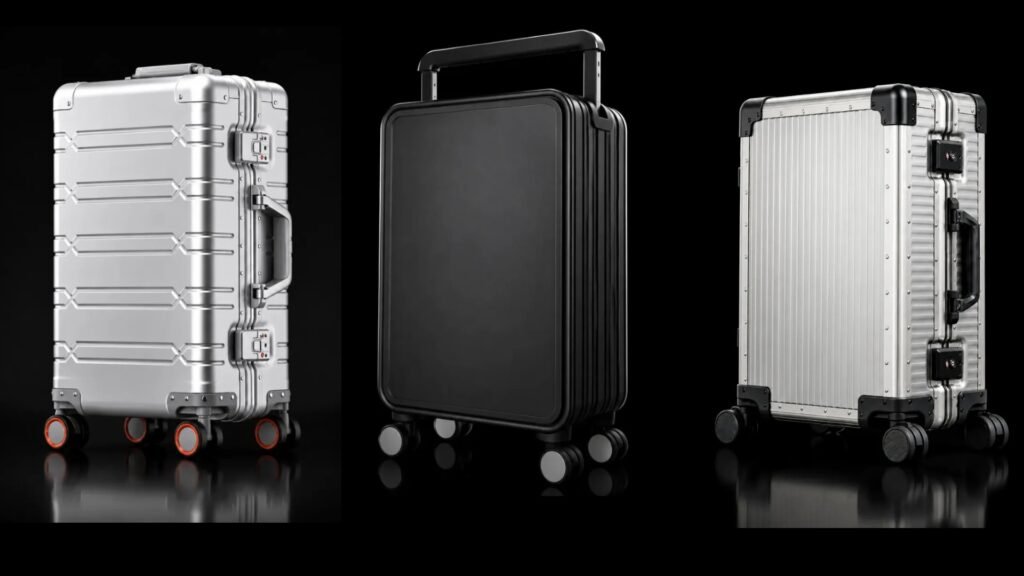
Luggage Wheel Types: A Guide for Custom Metal Luggage Buyers
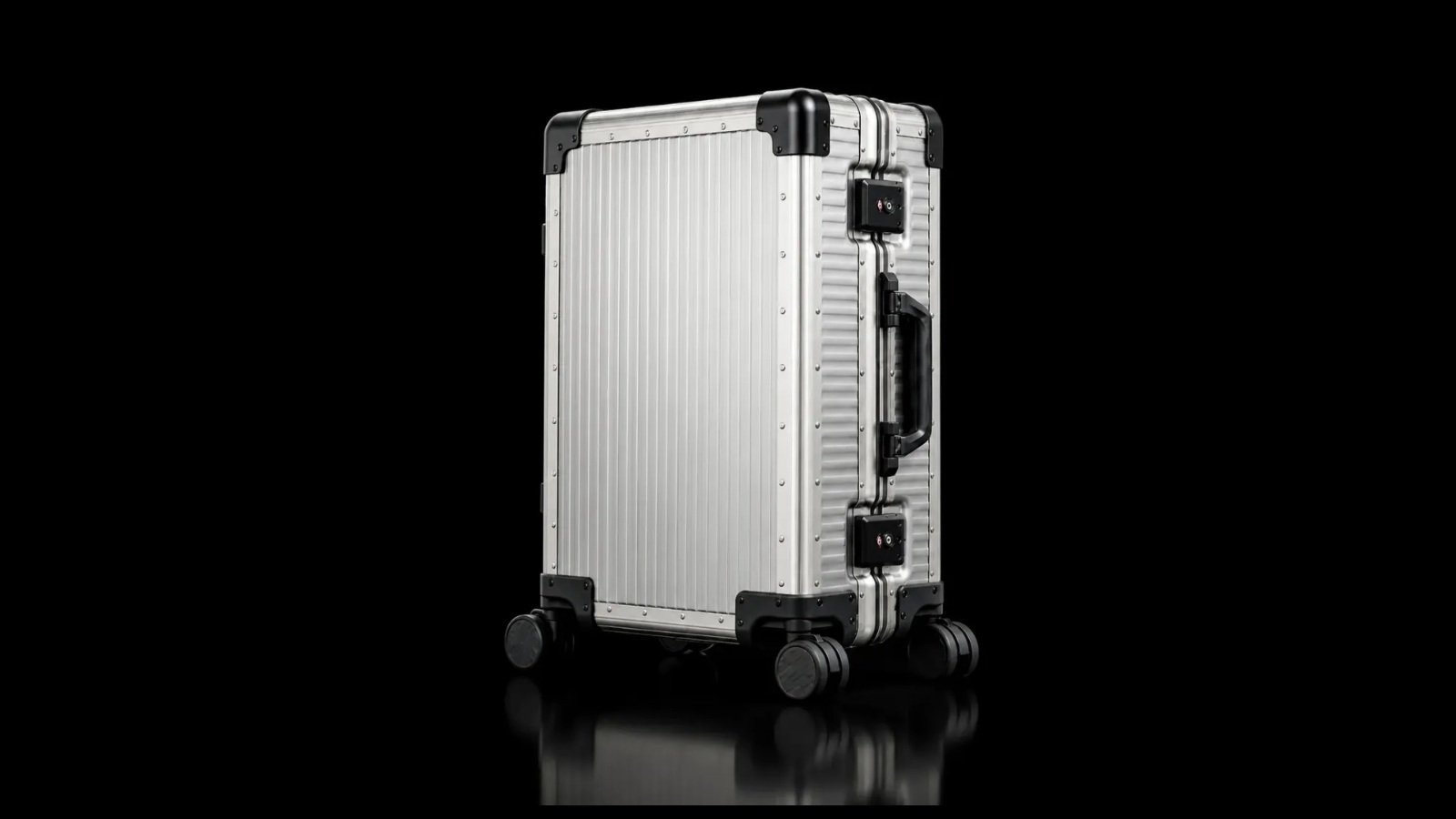
For a brand developing a metal luggage line or specifying a bulk order, choose the wheel assembly as part of the finished case. Start with the way the case will roll and its intended load, then compare wheel layout, tread, mounting space and replacement access. The selected assembly must fit the case and meet the agreed sample checks within your project budget.
An existing model’s standard wheel assembly is a starting point. Explain what your team wants to improve—rolling noise, handling, fitted dimensions or access for replacement—so we can compare a change against that starting configuration. Keep the priorities in order: a change that improves one feature still needs to suit the other requirements of the case.
Fixed, Spinner, Single and Double Wheels: What Does Each Term Mean?
Separate two questions in the specification: how the wheel housing turns, and how many wheels sit in each housing. These features can be combined and should be described separately.
| Type | What it describes | What to specify |
|---|---|---|
| Fixed wheels | The housing does not swivel with the direction of travel. A typical two-wheel case is tilted and pulled. | Wheel positions and intended towing arrangement |
| Spinner wheels | The housing swivels, allowing the case to roll upright and change direction. | Number of assemblies and single- or double-wheel configuration |
| Single wheels | One wheel in each housing | State this alongside the housing’s swivel or fixed arrangement. |
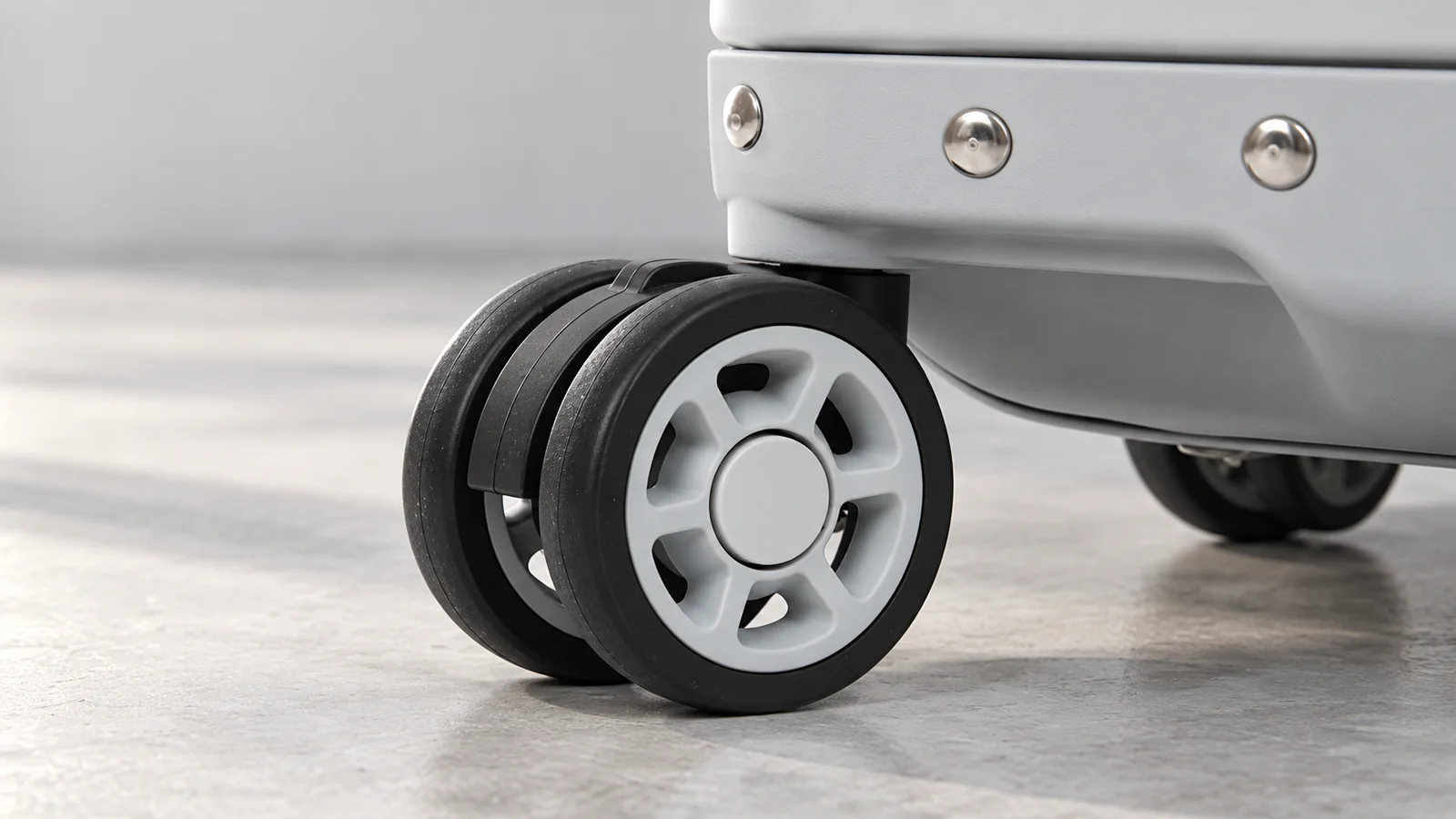
| Double wheels | Two wheels side by side in each housing | For example, one double-spinner assembly at each of four corners |
Your purchasing team can send close-up images of a reference product with the brief. Images help explain the appearance and arrangement you want. Include the assembly model and mounting dimensions in the selection information for quoting and sample review.
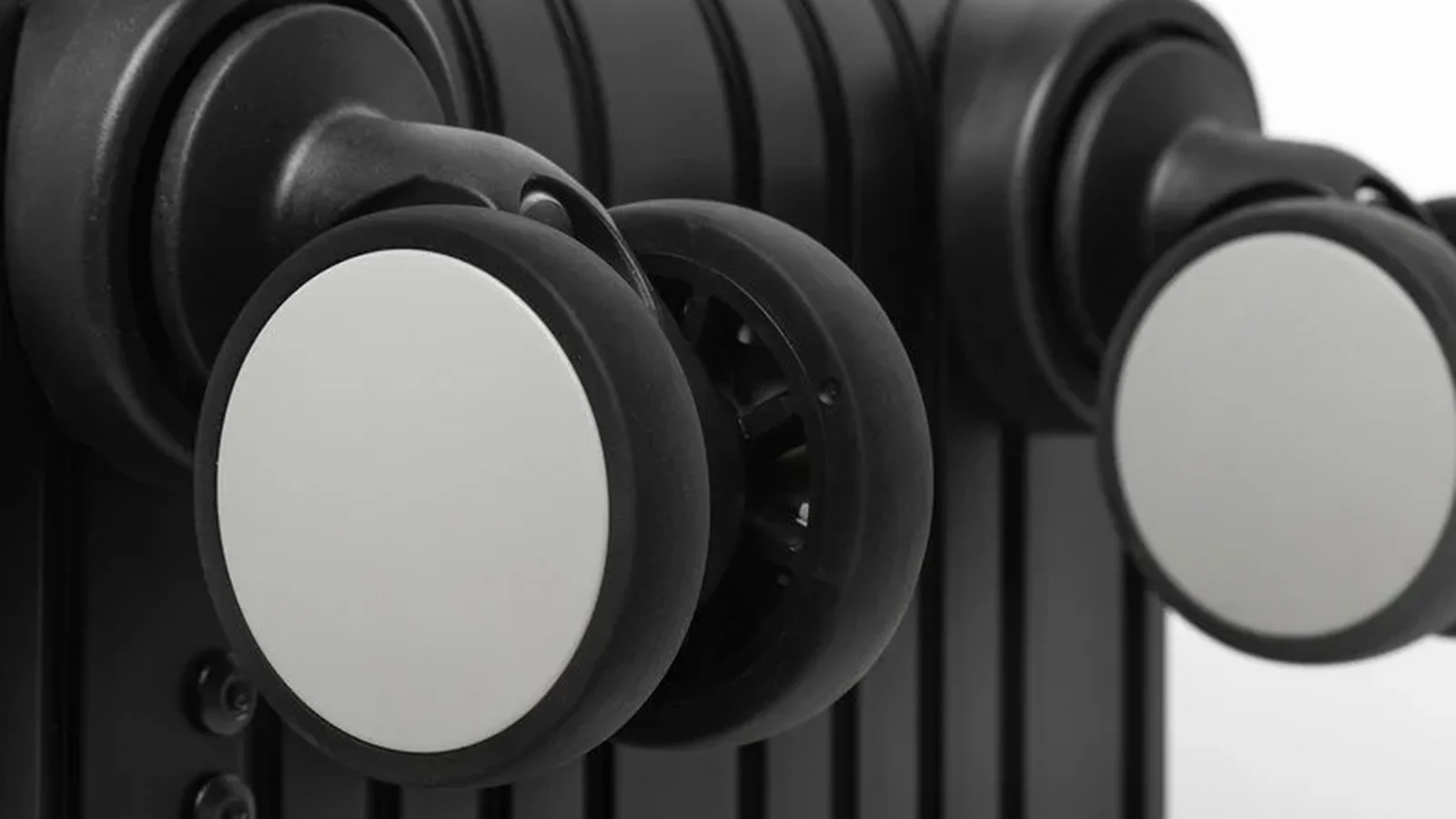
On a four-corner spinner case, four assemblies with two wheels each may be described as an eight-wheel system. That means four mounting positions, not eight independently mounted assemblies. When comparing single and double wheels, check the complete assembly’s installed dimensions and compare loaded rolling and turning on the intended case. Diameter, tread and bearing configuration still matter; wheel count alone is not a quality specification.
Specify Dimensions and Loads for Each Case Size
Suppose your line includes carry-on and larger checked cases with a consistent appearance. You can discuss similar-looking wheel assemblies, then check mounting and load requirements for each case size. A shared appearance does not require every internal component to be identical.
For carry-on models, consider the external dimensions of the complete case with its wheels fitted. Wheel diameter is only one measurement; the base and housing also contribute to installed height. Larger checked cases need the same dimensional review, along with assessment against their target loaded weight.
The load includes the case itself and its intended contents. The number of assemblies touching the ground can change between upright pushing and tilted towing. Dividing total weight by four does not, by itself, establish the required capacity of each assembly.
For a business line used mainly in airports and hotels, tell us whether rolling noise, turning feel or fitted height takes priority, and include the relevant floors in sample review. For a line expected to cross paving and uneven joints, describe those surfaces and the loaded weight rather than asking only for a particular tread name. If the same collection has several case sizes, review each size’s fit and load. Replacement access is addressed in the spare-parts section below.
YCT-001 and TS-001 Use TPE Treads as Standard, with Configuration Options
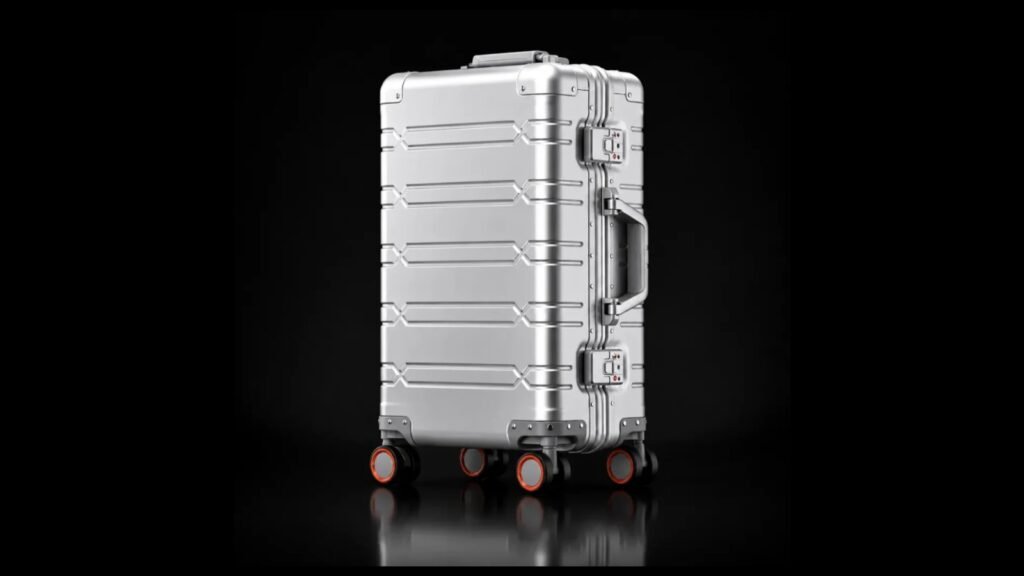
Our YCT-001 and TS-001 models come with TPE-tread wheel assemblies as standard. Other materials and configurations can be discussed against your requirements and budget, including single or double wheels and replacement access.
TPE is a family of thermoplastic elastomers that includes TPU (thermoplastic polyurethane). PU means polyurethane, but that abbreviation alone does not identify the exact grade or construction. In this guide, the confirmed TPE specification refers to the tread that contacts the ground. Identify the tread, core, bearing and housing separately when comparing assemblies.
Compare a proposed replacement tread against the actual standard assembly using the same case, load, surface and handling method. Identify the material grade and hardness where available, along with wheel diameter and bearing configuration. Compare pushing and turning as well as noise. For a wear-resistance requirement, agree on a test method and acceptance criteria; a brief rolling demonstration does not establish service life. The material name alone should not determine which option enters production.
If the standard assembly already meets the loaded rolling and turning requirements, identify the remaining reason for a change. For replacement access, review the fixing arrangement. For a noise or handling change, compare candidate components in the assembled case before selecting one.
List any suspension requirement separately. Tread material and suspension design are different selection points; a material name does not establish that an assembly has the required suspension arrangement. Possible combinations depend on the candidate assembly and available space in the case base.
Will Your Specified Wheel Assembly Fit an Existing Case Model?
If your brand already specifies a wheel assembly or component supplier, provide the model, drawing or sample information. Assessing whether it can be used means comparing its mounting base with the connection points on the selected case.
Check the mating surface, hole positions and fasteners, followed by installed height and swivel clearance. Equal wheel diameters do not establish matching bases or hole patterns. An assembly that turns freely on its own may contact neighboring parts once installed.
After reviewing the drawing, assess fixing and turning on an assembled sample. If the interface and clearance are suitable, continue with loaded rolling checks. Otherwise, the next step depends on which design element your team wants to retain:
- Keep the existing case base: consider other assemblies that fit its mounting arrangement and meet the use requirements.
- Keep the specified wheel assembly: assess changes to the connection points and whether structural or tooling work is involved.
Compare both routes on the same case model, size, order quantities and approved configuration. Separate the wheel assembly price from any mounting changes, tooling work and additional sampling needed to fit it. Ask which costs apply to development and which are included in the complete-case production quote. A lower wheel price does not by itself show which route costs less to deliver as an assembled case.
Approve Wheel Samples Before Production and Recheck Any Corrections
Evaluate wheel samples in the complete-case configuration intended for the order, for review by your purchasing, product or quality team. Record the case model, assembly and loaded weight, then check straight-line movement and turning on agreed surfaces. When comparing two options, keep the case, load, route and handling method as consistent as possible.
Describe the movement and location when reporting a problem. For example, “a rubbing sound near the rear-right wheel when the loaded case turns left,” with a video of the movement, identifies where to investigate. Contact points and assembly condition can then be examined before deciding which part needs adjustment.
If the housing contacts a neighboring part as it swivels, address the clearance first. A different tread material does not resolve that contact. After correction, repeat the original load and movement checks, and also check straight-line travel, other turning directions and the fixing points.
A short rolling check helps your team assess handling and obvious fitting problems. If the project also requires prolonged rolling evaluation, discuss the method, load, travel distance and acceptance criteria before sampling. The assessment should cover tread wear and damage to the assembly and its attachment points after the run.
Provide any brand- or importer-specified test requirements before sampling. Record the accepted assembly, review conditions, resolved issues and outstanding checks in the approval information. Our metal luggage sample approval guide explains how the final configuration and revisions are handed to production and QC.
Plan Removal and Spare Parts with the Wheel Selection
Our YCT-007 has detachable spinner assemblies. Brands planning after-sales wheel replacement can discuss spare parts during selection.
First establish who will carry out the replacement and whether the whole assembly or a component is to be changed. Then review the tools, access to the fixing points, and checks for secure fitting and turning after installation. “Detachable” does not explain those details or necessarily mean tool-free.
Match spare assemblies by case model, size and mounting position. Record front/rear and left/right from an agreed viewpoint, supported by a bottom-view photo or mounting drawing, and check whether the positions use identical or different parts. If you want one spare to serve several case sizes or corners, verify fit and load requirements for each application before treating it as shared inventory.
If you need spares supplied with the order, include their applicable models, quantities and costs. Update the parts information when the wheel configuration changes so that after-sales replacements correspond to the correct build.
Carry the Approved Wheel Configuration into Production and Repeat Orders
Once a sample is selected, its case model, components and inspection requirements need to be traceable to the order. We recommend retaining the following information so both teams can refer to the same production and replacement-parts requirements.
| Item | Record |
|---|---|
| Applicable case | Model, size and approved sample version |
| Wheel configuration | Assembly reference, tread material, color, and single or double wheels |
| Mounting requirements | Applicable drawing, fixing method and mounting position |
| Inspection requirements | Agreed load, operations and acceptance criteria; a defined method where endurance testing is required |
| Spare parts | Replaceable components, applicable models, quantities and quoted terms |
For the first production order, check the installed assembly against the approved reference and carry out the agreed functional checks. Repeat orders should identify the same version, or list the changes and batches affected. Our metal luggage pre-shipment inspection guide explains how these configuration checks fit into the wider batch inspection before dispatch.
If design, cost or availability calls for a substitute component, we recommend agreeing a change-approval process in the order: identify the change, provide the relevant information, determine whether another sample or test is needed, and obtain buyer approval. Similar dimensions and appearance do not make an assembly an approved substitute.
To discuss a metal luggage line, send us the case model, target loaded weight, intended use and budget. Add photos or technical information for any specified assembly. On our custom metal luggage page, you can outline the features to retain and the parts to change, starting from an existing model and developing a configuration for your brand.
Tell us about your luggage project
Share your preferred model, quantity and customization requirements.