Metal Luggage Sample Approval: What to Check Before Production
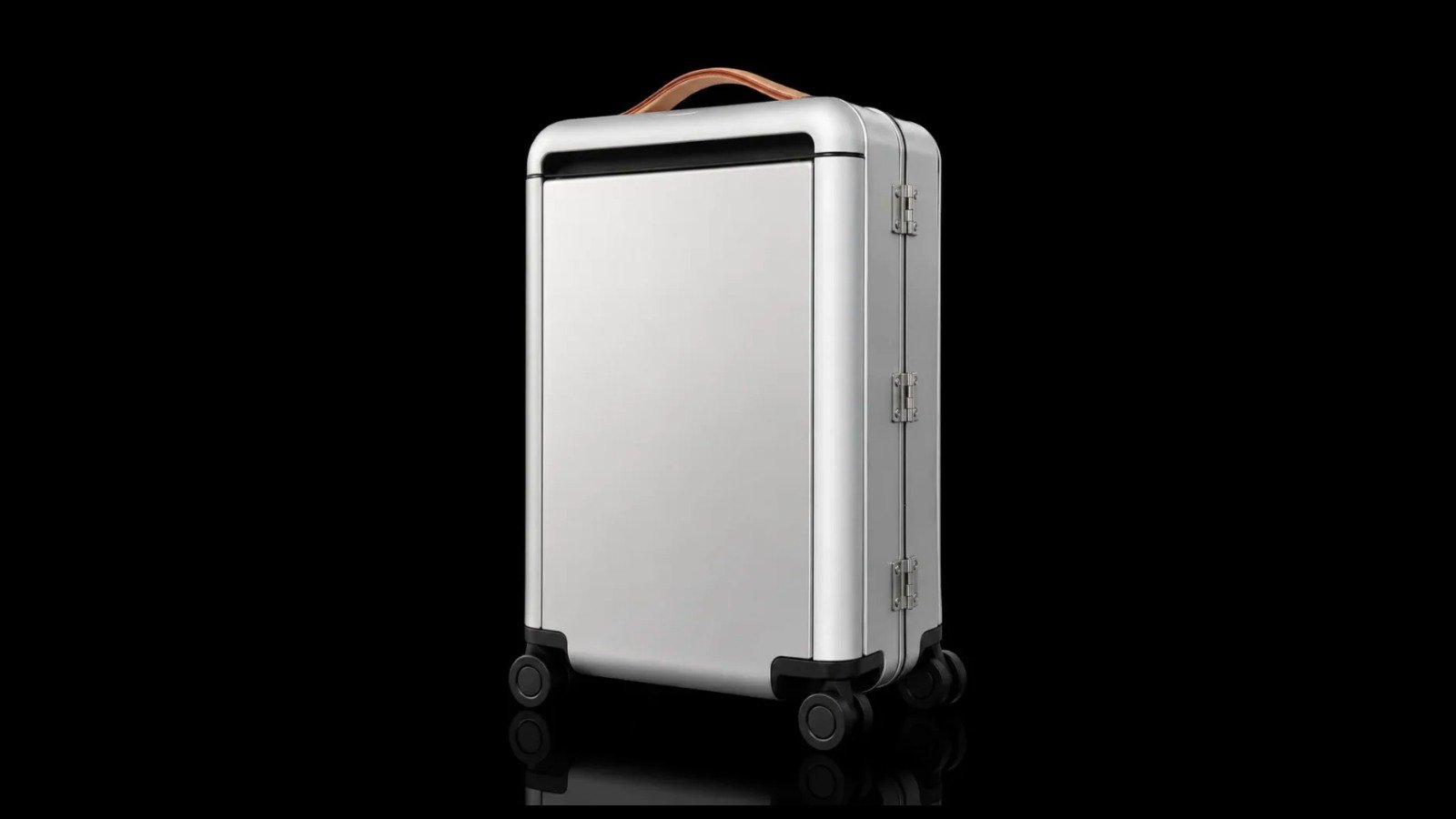
When a custom metal luggage sample arrives, you are reviewing the product your brand intends to sell: its shell material, wheel and trolley configuration, branding, interior, and packaging. You also need to identify any details that still need work.
At SuitcaseMaker, we review these details with you so the approved requirements can guide production. First, we establish what is approved and what needs revision. Then the final requirements need to reach the people making, assembling, and inspecting the order.
Sample approval means agreeing on the physical result and the specifications to use for production. The sample, final artwork, and order configuration should refer to the same version.
Define What This Sample Covers—and What Is Still Unfinished
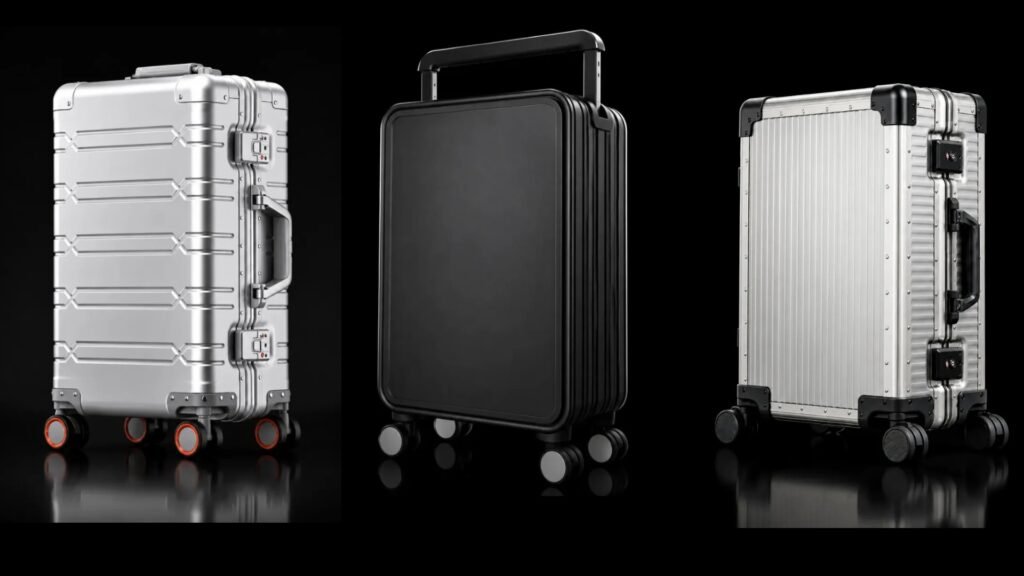
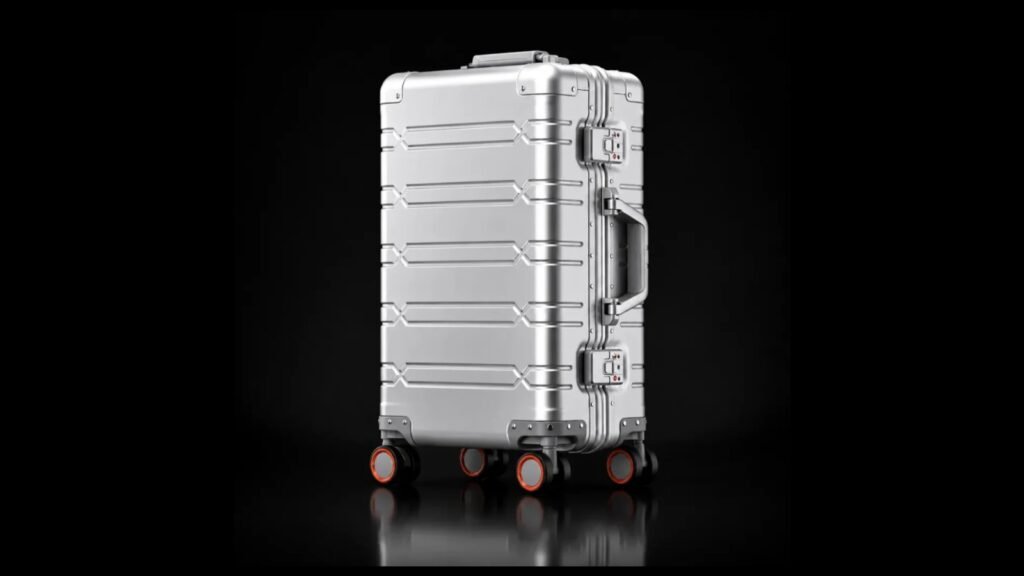
For example, an existing model from our aluminum luggage range can help you evaluate the shape, construction, and basic configuration before deciding what to customize. It does not approve details that have not been shown.
For example, you might receive a silver case with a standard interior while planning a black version with your logo and a custom divider. Approving the case size and closure does not also approve the black finish, finished logo, or revised interior. Those details still need their own artwork, physical references, or specifications.
Compare the sample with the requested model, size, color, and changes. Mark each item as approved, needs revision, or not yet shown. Keep that last category visible: it identifies details that cannot yet serve as production references.
If an early sample uses a temporary lining or wheel set, identify it separately. Approve the intended production configuration once the relevant material or component is available for review; approval of a temporary part should not carry over automatically.
Check Shell Material, Finished Dimensions, Weight, and Finish
Start with the material used for the shell. Our TT-001 titanium suitcase has a titanium-alloy shell. Here, “titanium” identifies the shell material, rather than a surface color. The frame, trolley, wheels, and other components have their own specifications; one material name does not describe every part of the case.
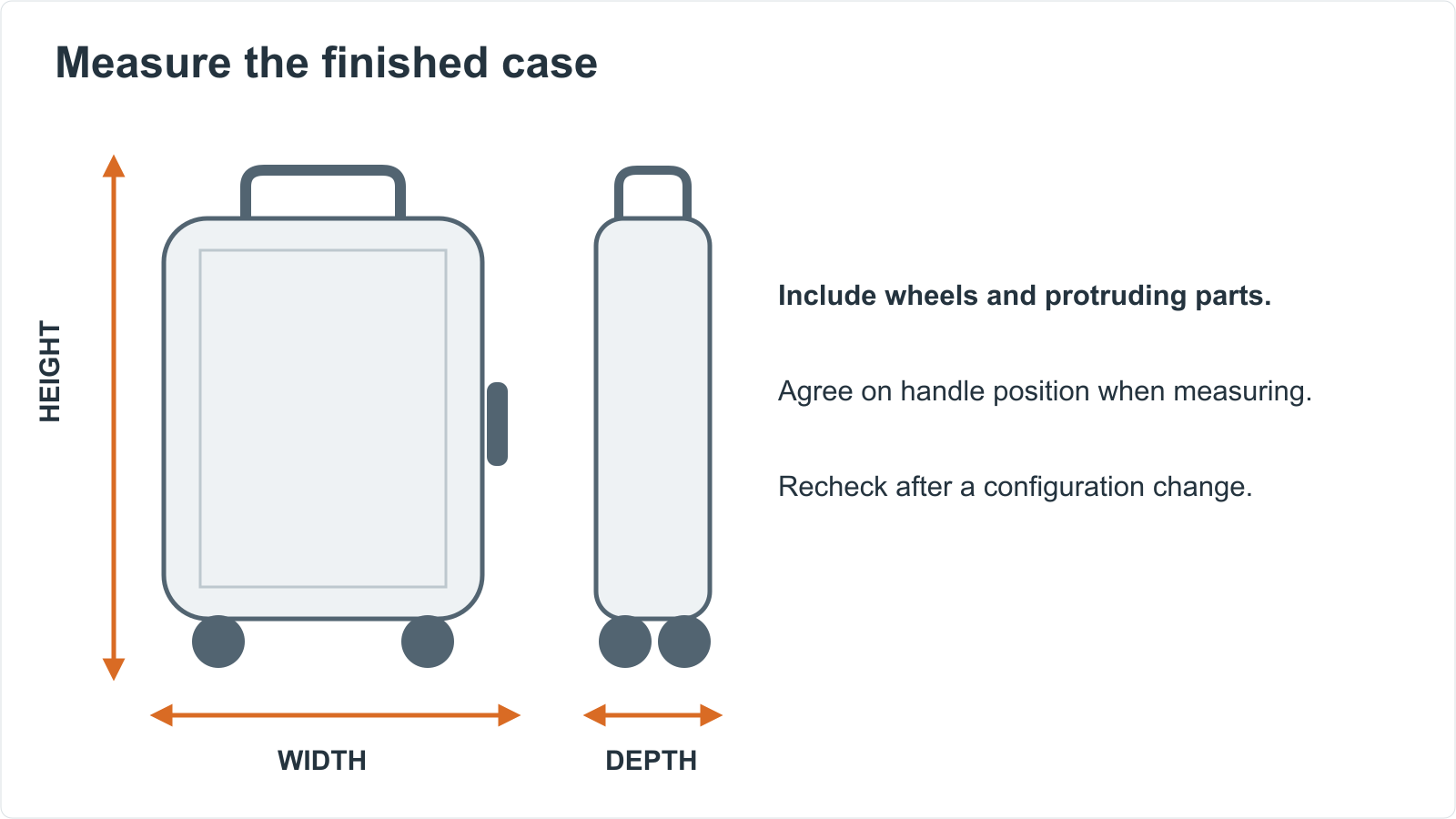
A nominal size such as “20-inch” is not a complete set of external dimensions. When confirming measurements for product listings or packaging, specify whether wheels, handles, and other protruding parts are included. Measure the final assembled configuration. Weight must also correspond to the selected hardware, lining, and accessories; a catalog weight should be rechecked when the configuration changes.
Review color, texture, and gloss together. For our TS-005, available finish routes include brushing or sandblasting followed by anodizing. These treatments produce different textures, so “silver” alone does not fully describe the result you want.
If your brand already has an approved finish reference, explain which color, texture direction, and gloss you want to retain. Photos help us discuss differences, but lighting and screens affect how color appears. For projects with close color-matching requirements, agree on a physical reference and how the finished product will be compared with it.
Check the Frame, Latches, Wheels, and Trolley on the Assembled Case
Metal luggage components need to be reviewed together. A shell that looks correct on its own does not establish whether the frame, hinges, and latches fit properly. Close the case and check whether the frame edges align and the latches engage without twisting or forcing the body. Repeat the review with the lining and dividers installed so their effect on closure is included.
Check trolley extension, retraction, and locking positions, along with its relationship to the interior. For wheels, review both swivel movement and the installation: does the wheel housing clear nearby parts, and is the assembled height appropriate? Agree on the load and review conditions if the project calls for a loaded rolling check.
Our YCT-001 and TS-001 use TPE wheel treads as standard, with other configurations open for discussion. When requesting a change, explain whether you want a different tread material, wheel diameter, wheel arrangement, or replacement method. Changing a tread material and changing the complete wheel assembly are different modifications. A replacement assembly needs to be evaluated against the mounting surface, hole positions, installed height, and swivel clearance on the actual case.
These operating checks help identify assembly issues; they do not replace endurance or other performance tests. A smooth rolling demonstration does not establish that a wheel has passed endurance testing. Agree separately on the tests and conditions required for your project. Our luggage wheel selection guide explains the configuration choices in more detail.
Review Your Logo, Interior, Labels, and Packaging
Once artwork is approved, review how the logo looks on the case. Check the file version, wording, orientation, size, and position: how far is it from the frame or ribs, does it sit where you intend, and do handles or other parts obstruct it? A close-up shows detail; a whole-case view helps you judge proportion.
Review the lining and dividers against the interior your product program needs. If a pocket must hold a particular laptop or an item in a corporate gift set, provide its dimensions and, where necessary, a physical example. Approving “a laptop pocket” alone does not confirm fit, retention, or clearance when the case closes.
Labels and packaging need their own review. Check label text, model references, and placement; verify carton identification, quantities, and the markings your order requires. With the actual packing arrangement, check how the case sits, which areas are protected, and where accessories go. Correct packaging artwork and a pack that fits the final case configuration are separate points to confirm.
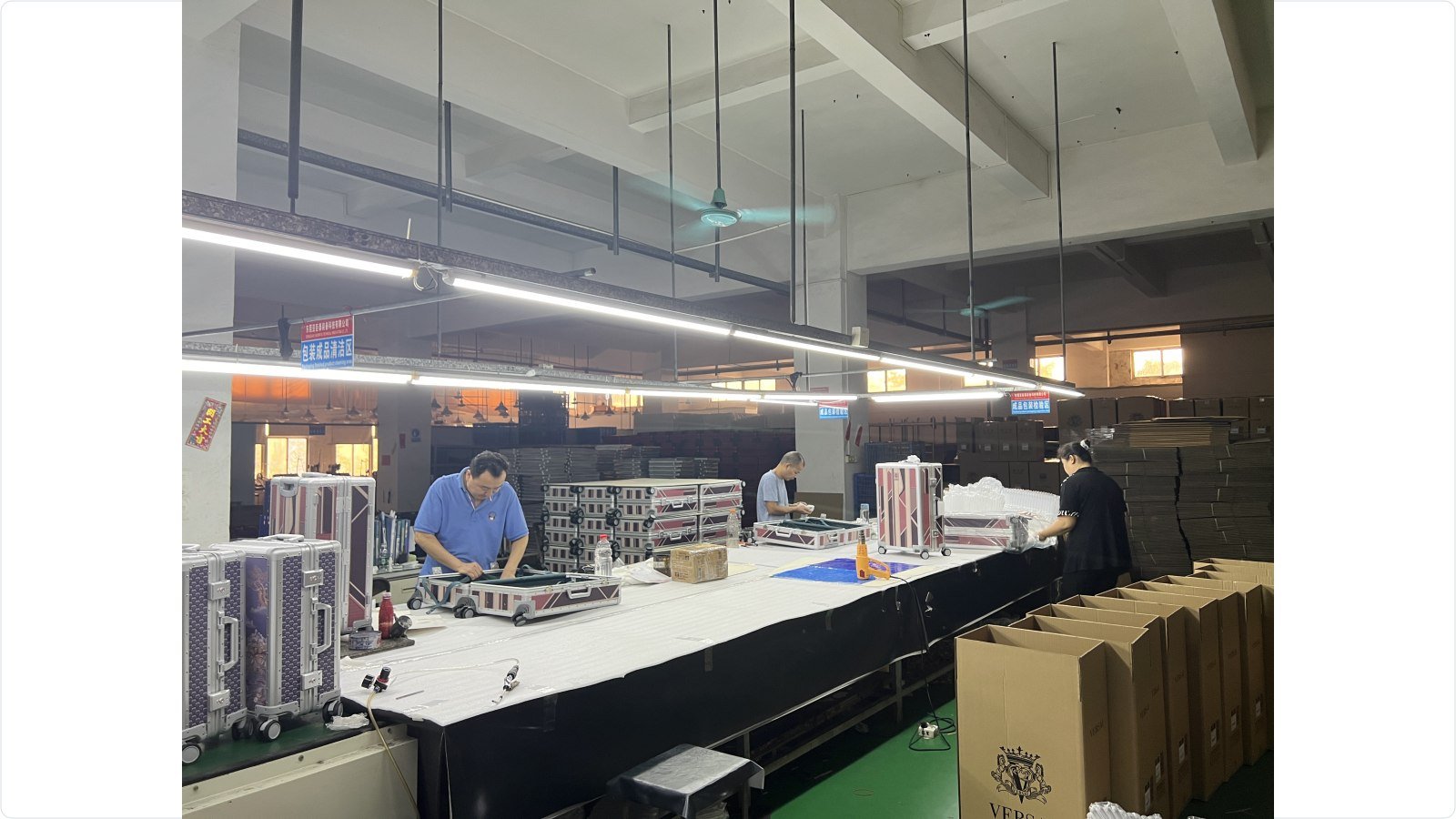
If the current sample does not include your custom packaging, keep packaging listed as pending. Approval of the case should not be treated as approval of a pack that has not yet been reviewed.
Set the Approval Scope for Each Size and Color
Our orders can combine different colors and sizes within the same model. However, combining quantities does not mean one sample approves every variation. If the larger size has a different divider or strap layout, approval of the smaller case’s interior does not cover that difference.
You do not need to assume that every combination requires a complete sample. List shared specifications and differences first, then decide whether each change needs a full case, a component sample, a finish reference, or dimensional information.
| What changes | What to review separately | How to choose a review method |
|---|---|---|
| Case size | Finished dimensions, interior layout, and component fit on that size | Compare dimensions and configuration first; decide what physical review is needed for fit and operation. |
| Shell color or finish | Color, texture, gloss, and appearance with the logo | Agree on a physical finish reference; discuss a complete case if the overall effect also needs review. |
| Wheels, trolley, or interior | Component specifications, installation, and effects on neighboring parts | Use drawings and photos to define the change, then the relevant physical assembly to review fit and operation. |
State which sizes and colors each approval covers. Keep combinations that have not been reviewed open. For order quantities and combinations, see our custom metal luggage MOQ guide.
Give Specific Revision Requests and Agree What Needs Another Sample
“Make the logo smaller,” “use smoother wheels,” or “improve the lining” tells us your impression, but not enough to define a change. Useful feedback identifies the model and sample version, the location of the issue, the intended result, and the sizes or colors affected.
Suppose a logo sits too close to the frame. Mark it on a whole-case photo, indicate the requested direction of movement, and confirm its position and size in the revised artwork. That drawing establishes the layout; a physical presentation is still needed if you want to judge the finished proportion or application. A reply saying “changed” is not a review of the result.
For an assembly change, explain what you want to improve. A request for larger wheels, for example, needs evaluation against the actual case and an appropriate assembled sample. A product image of the new wheel alone does not confirm that it fits.
Whether another complete case is needed depends on the change. A text correction can first be reviewed in updated artwork. Changes to material appearance, component fit, or operation need the relevant physical evidence. If a revision affects component cost or the work involved, reconfirm the quotation and schedule as well.
For each revision, keep the original issue, the change made, and the review result together. This lets the next discussion focus on unresolved points instead of reopening requirements that have already been agreed.
How We Brief Production and QC After Sample Approval
After you approve the sample, we hold a meeting to communicate the final requirements to the relevant production stages and quality inspection. The briefing needs to identify the order’s sizes and configurations, what changed during sampling, and the requirements each stage will use to make and inspect the cases.
Identify the order configuration and the changes
The briefing should refer to the final sample, artwork, and order specifications. Model, size, color, and quantity need to correspond, with the final version identified for customized details such as the logo, interior, and wheels.
Several sampling rounds can leave earlier configurations in circulation. For example, the first sample may have a standard lining while the approved version has a revised divider. Or the case shape may stay the same while the customer chooses a different wheel set. These differences need to be called out so production does not continue from the original configuration.
For mixed sizes or colors, specify which products each change affects. An interior change for one size should not automatically be applied to the entire order.
Explain each change to the relevant making and assembly stages
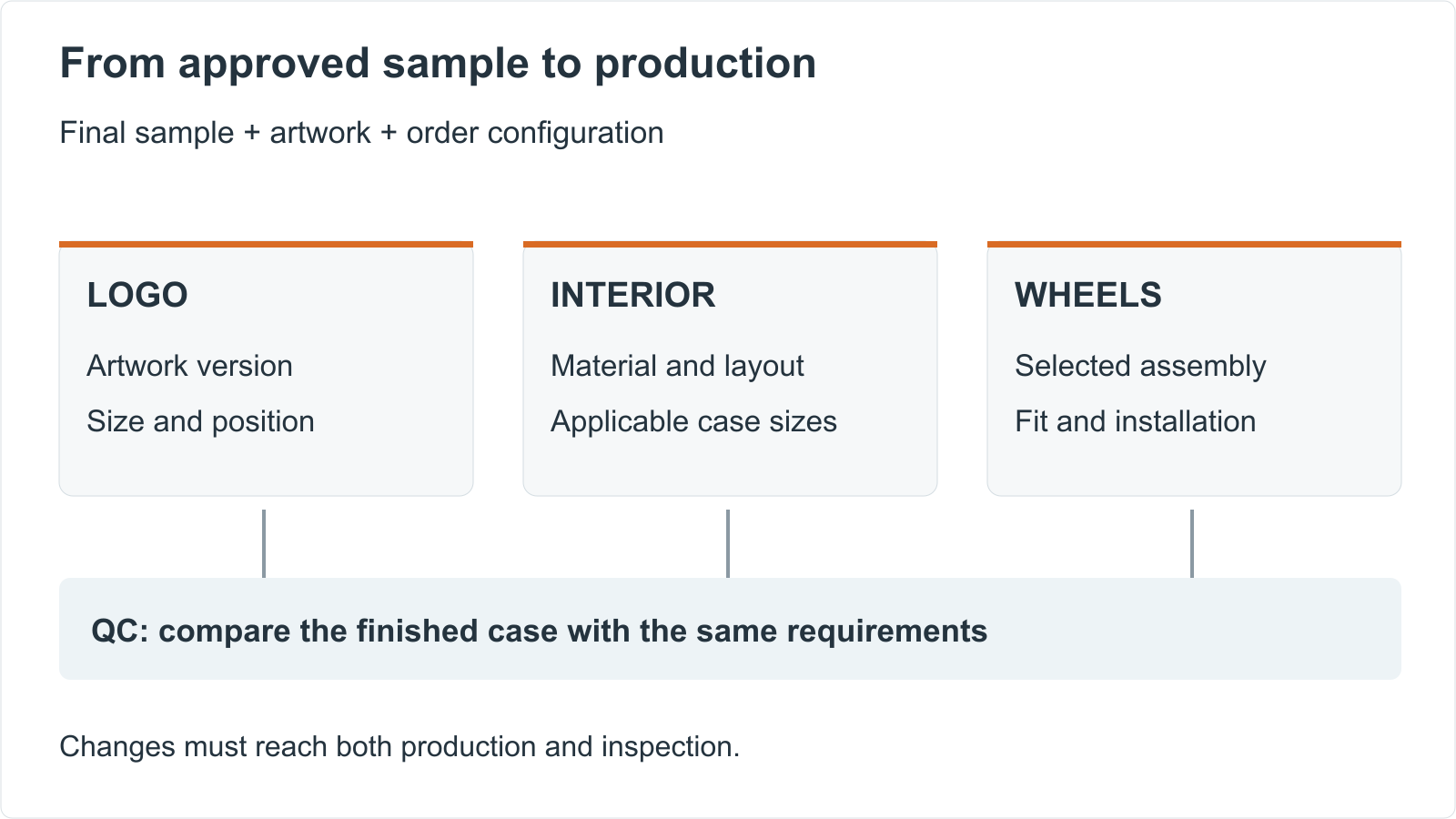
The information needed for a logo, lining, and wheel change is different.
Logo work needs the final artwork, size, orientation, and placement. If a logo moves upward, the people making the mark need the correct artwork, while the installation stage needs the new location. Position should relate to identifiable points such as the frame or ribs, rather than a direction such as “a little higher.”
Interior work needs the material, color, and layout of dividers, pockets, and straps. A revised divider position must reach both the making and fitting stages. Where sizes differ, identify the scope rather than treating the smaller case’s layout as the specification for the full range.
Wheel installation needs the selected assembly and the models or sizes it applies to. If the wheels change, communicate the approved configuration and installation requirements. Where the mounting position, height, or swivel clearance changes, explain what was verified during sampling so assembly and inspection have the relevant reference.
Give QC the final changes, too
QC needs the same final requirements as production, particularly the revisions the customer requested and approved during sampling.
If the logo moved, inspection needs to compare its finished position with the final requirement. If the interior changed, the checks need to reflect the revised divider, pocket, or strap layout. If the wheels changed, verify the installed configuration and review assembly and operation according to the project requirements.
Different sizes in one order may have different inspection points. A case that opens and closes normally has not necessarily met every custom requirement.
Resolve conflicting references before handing them to production
If the sample, final artwork, and order description disagree, resolve that difference before the handoff. For example, the logo on a physical sample may still be in its old position while the last approved drawing shows a new one. Specify which reference governs that detail so making, assembly, and QC do not interpret it differently. Sample retention and storage of approval records can be agreed for the project.
The handoff should leave each stage clear on three things: the requirements for this order, how its part of the work is to be done, and what to check afterward.
We sample and inspect every production batch according to the customer’s project requirements. Remote inspection is available if you cannot visit the factory. Our aluminum luggage manufacturing guide covers the production and inspection stages.
Metal Luggage Sample Approval FAQ
How long does sampling an existing model take?
Sampling an existing model takes 20 days. This is not the total time for development, all revisions, and delivery. New structures, tooling, or further modifications need a project-specific schedule.
Can we review the sample through photos and video?
Photos help review logo placement, interior layout, and visible revisions. Video can show closure, trolley operation, and wheel swivel. Neither fully communicates color, feel, or rolling behavior, and neither replaces a performance test with defined conditions. Agree on what can be reviewed remotely and what still needs a physical sample or relevant test information.
What if we change a color or component after approval?
Send us the change and the order variants affected so we can review the configuration, quotation, and schedule again. If production has started, feasibility also depends on its current stage. Unchanged parts of the original sample can remain references; the new configuration needs separate confirmation.
Developing a metal luggage range for your brand? Start with an existing model from our metal luggage wholesale range and send us the sizes, colors, artwork, and details you want to change. A sketch or initial idea is enough to begin a custom luggage discussion and define what the sample needs to demonstrate.
Tell us about your luggage project
Share your preferred model, quantity and customization requirements.